
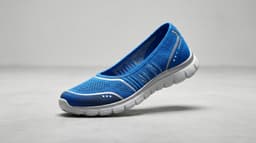
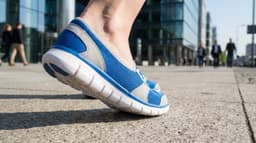

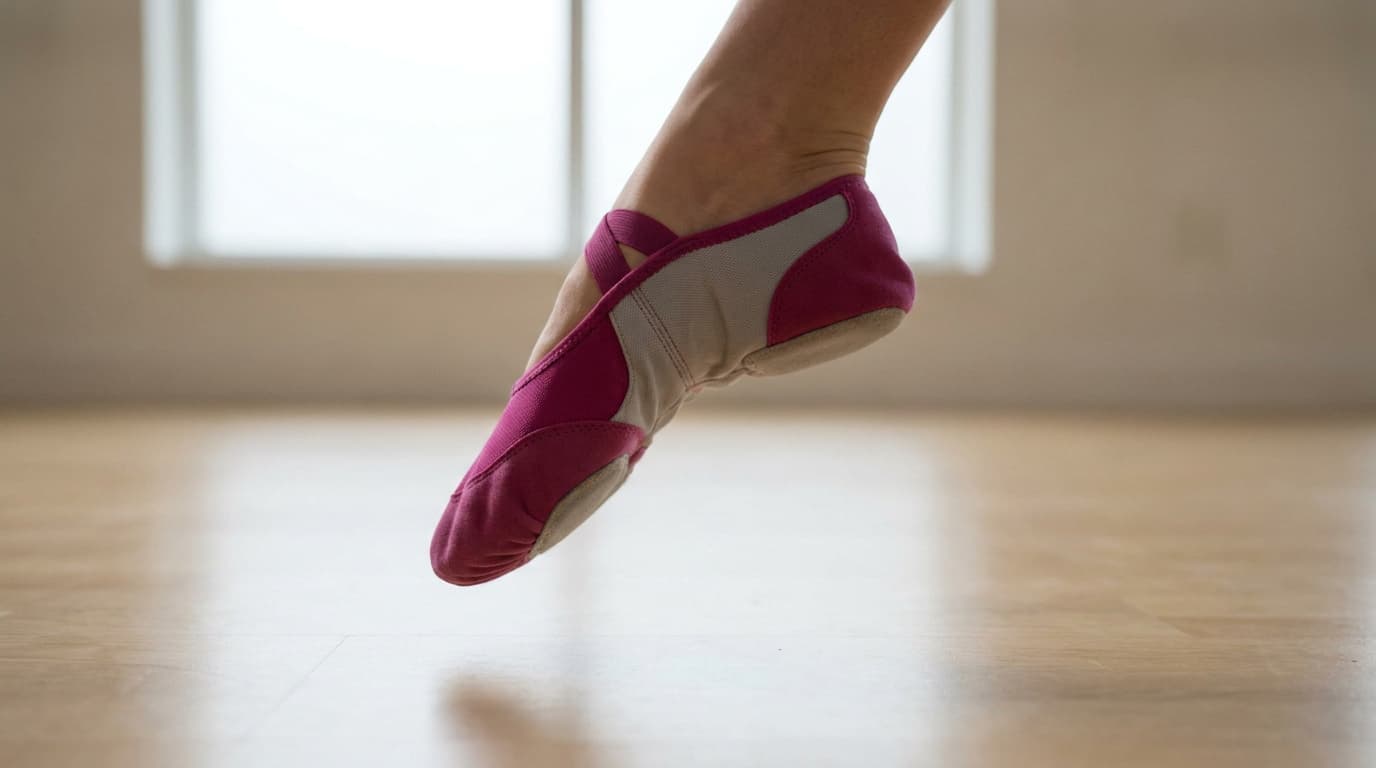
Modern ballet flats fuse the flexibility of a split-sole construction with the breathability of a mesh upper. This hybrid structure guarantees maximum arch mobility and a precise hold during technical turns. Essential for protecting your joints thanks to built-in cushioning, they weigh less than 150 grams.
A standard athletic shoe often weighs more than 300 grams, which can hinder precise movement during hybrid workouts. You end up penalised by an overly rigid structure that limits the natural flex of the arch.
This article breaks down the features of sport ballet flats to help you pick a model that combines the suppleness of a technical dance slipper with the protection performance demands.
Features of competition-grade ballet flats
Modern sport ballet flats pair an ultra-flexible split-sole construction with a breathable mesh upper. They deliver a precise hold through elastic straps, crucial for stability during technical turns and dynamic landings.
This hybrid structure lets you move fluidly from the look of a dance slipper to athletic performance.
The fusion of suppleness and technical support
The hybrid structure is a blend of the traditional dance slipper and the fitness trainer. The foot stays free but protected. This design encourages total mobility.
The elastic upper wraps the foot like a second skin. Materials such as neoprene or stretch dominate. This prevents internal friction during intense effort. Comfort is kept up over time.
Efficient technical support promotes perfect athletic posture. The precision of every move depends directly on it.
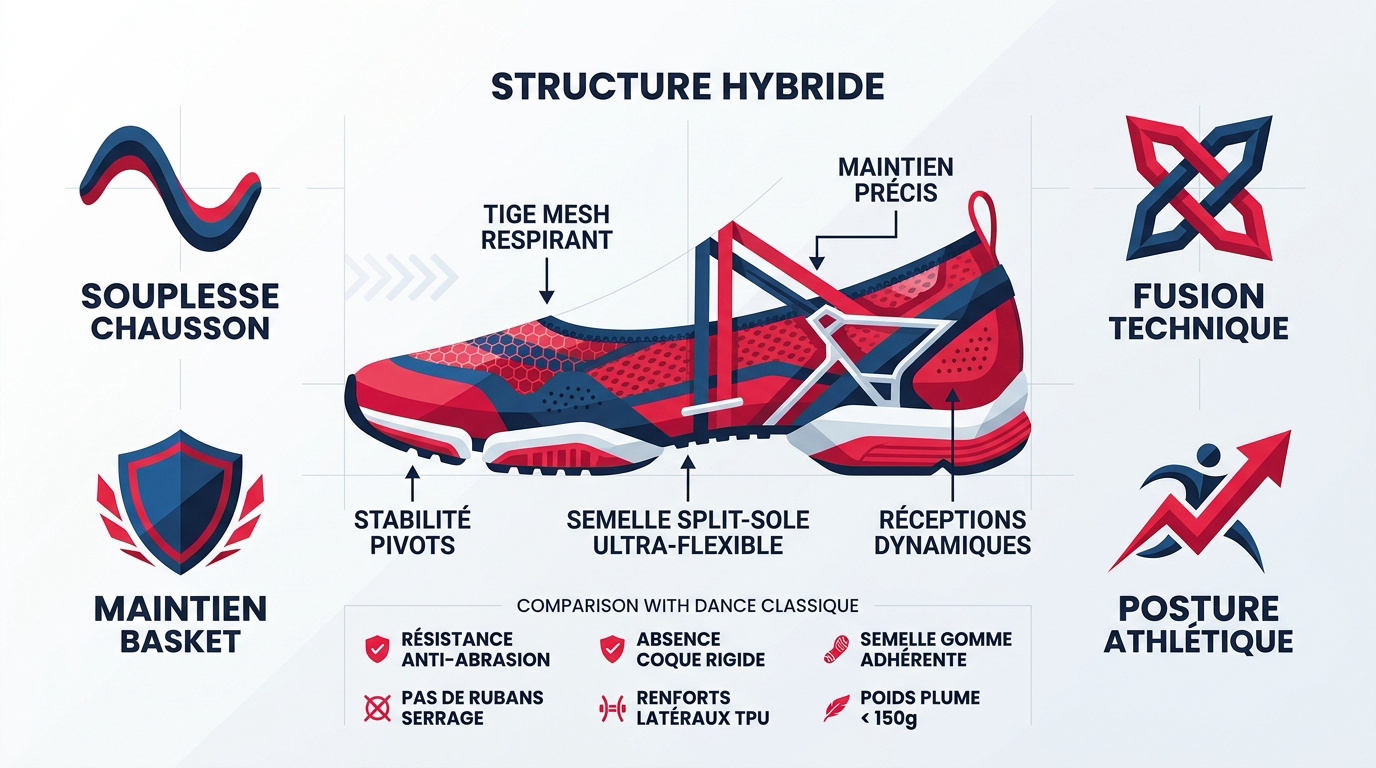
Differences with classic dance models
Sport models use anti-abrasion fabrics. They are built to last on varied surfaces. Classic dance favours fragile satin. Durability is a top selection criterion here.
The absence of a rigid box defines these models. No hard plaster or stiff glue here. Flexibility is total to allow a natural stride. The foot works without mechanical constraint or pain.
Several technical elements set these shoes apart from traditional artistic slippers:
- Grippy rubber outsole
- No drawstring laces
- Lateral TPU reinforcements
- Featherweight under 150 grams
3 technical criteria for evaluating performance
But beyond the overall structure, pure performance rests on mechanical details invisible to the naked eye.
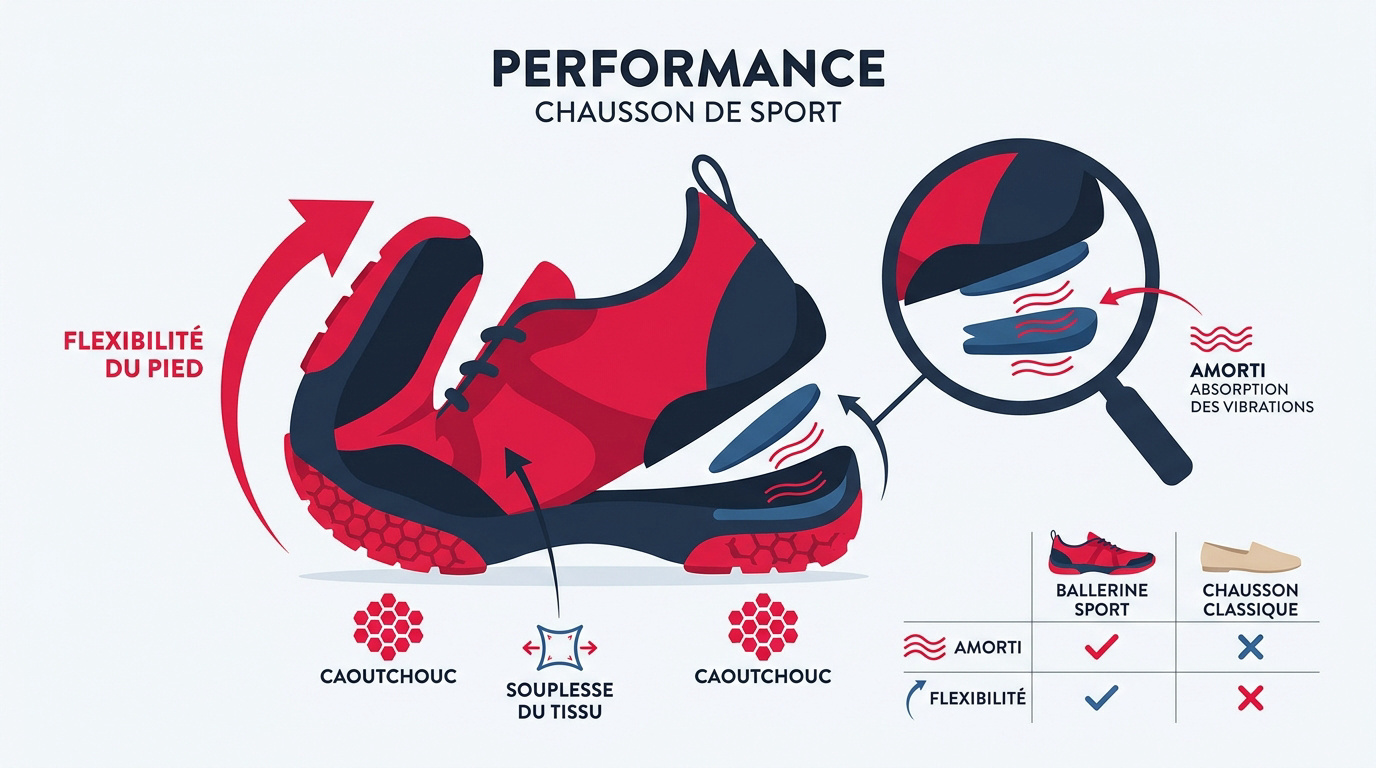
The split-sole construction for arch mobility
The split sole offers total freedom. It allows maximum extension of the arch. The foot can point without resistance from the shoe. That is essential for precision movements.
Strategic grip zones complete the package. Rubber is placed under the metatarsals and the heel. The midfoot stays supple in fabric. This guarantees optimal grip without adding weight.
This architecture promotes immediate responsiveness during changes of direction. It lets you feel the floor better.
Cushioning and shock absorption
Foam inserts protect the heel. A thin layer of EVA absorbs vibrations. It is not a running shoe, but the protection is there. Your joints will thank you after a session.
Metatarsal protection is built in too. Jump landings load the forefoot. Targeted padding limits micro-trauma. Comfort thus pairs with safety.
The balance between artistic suppleness and athletic protection defines this specific kind of gear.
| Criterion | Sport ballet flat | Classic slipper | Recommended use |
|---|---|---|---|
| Cushioning | 3/5 | 1/5 | Jumps and impacts |
| Floor grip | 4/5 | 2/5 | Slippery floors |
| Durability | High | Medium | Intensive training |
| Flexibility | Excellent | Maximum | Footwork |
Models suited to your discipline
In practice, the final choice mostly depends on your playing field and the intensity of your movements.
Shoes for Latin and ballroom dance
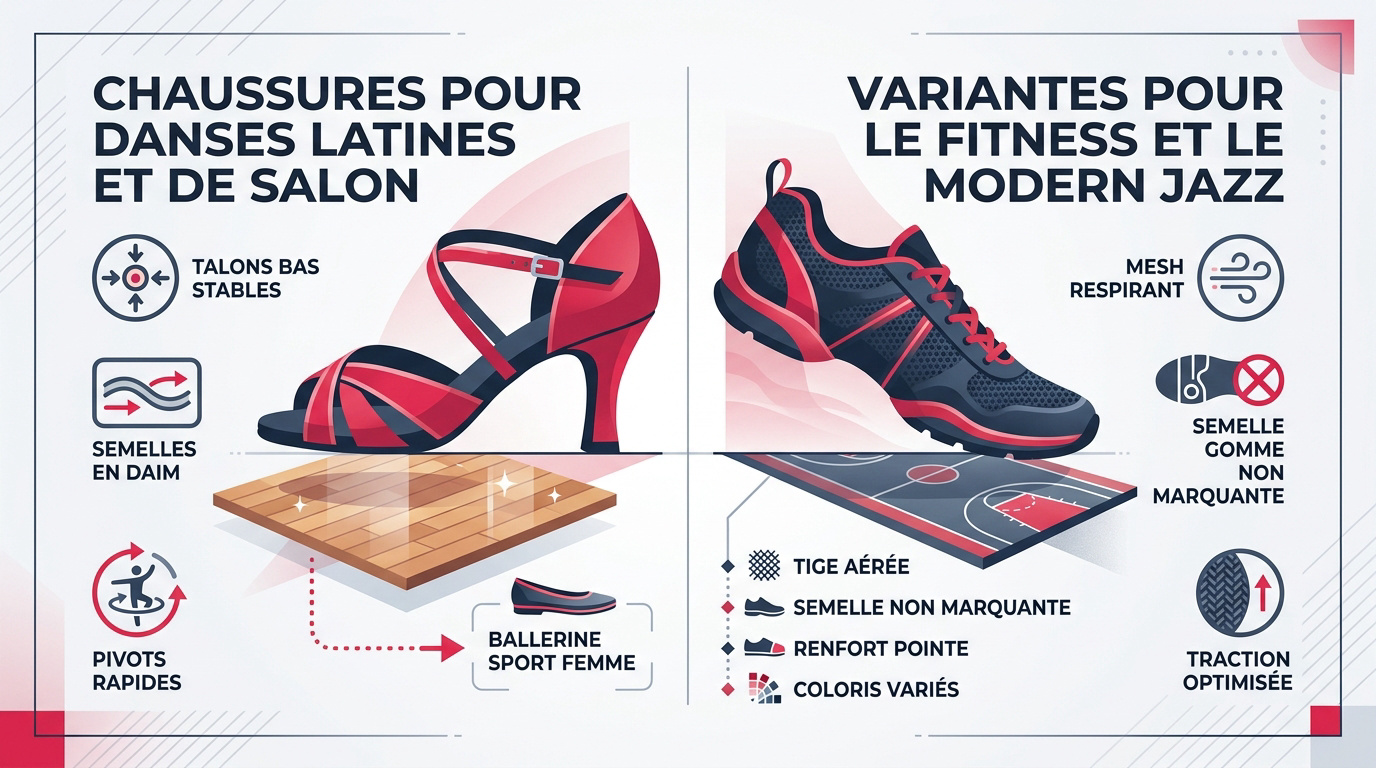
Models with low 2.5 cm heels guarantee optimal stability. They offer a steady centre of gravity. Balance is essential for partner dances. You avoid dangerous tilts.
The suede sole is the central technical element here. This material lets you glide without slipping. Turns become fluid and fast. It is the standard for competition floors in sport dance.
Choosing ballet flats for women answers a need for versatility. These models marry the look of the ballroom with the rigour of training. They deliver quality hold day to day.
Variants for fitness and modern jazz
For cardio, go for knitted mesh models. Breathability is the strong point here. The foot stays dry despite the sweat. Moisture wicking is almost instant.
Traction in the gym calls for specific materials. Outsoles are often made of non-marking rubber. They grip synthetic floors. This allows sharp footwork without the risk of an uncontrolled slip.
- Airy mesh upper
- Non-marking sole
- Toe reinforcement for floor work
- Varied colourways
Ballroom dance flat
Suede sole for measured glide on competition floors
Mesh fitness flat
Knitted mesh upper and non-marking rubber sole for the gym
Comfort and foot shape: dialling in the fit
Yet even the best technology is useless if the shoe hurts your foot.
Solutions for wide and sensitive feet
Roomy toe boxes. A wide forefoot avoids compressing the toes. This is vital to prevent lingering pain. The foot must be able to spread naturally.
Stretchy materials. Lycra or technical knits adapt to deformities. If you have a bunion (hallux valgus), these fabrics are your allies. They limit painful pressure points.
Immediate comfort remains the first selection criterion for regular practice.
Managing sizing and tightness
Margin at the toe. Leave about five millimetres of free space. The foot lengthens during effort. A shoe that is too short guarantees black toenails.
Strap systems. Crossed elastics provide perfect lateral stability. They hold the instep without cutting off circulation. This is the secret of a tailored fit.
For an optimal fit of your ballet flats, follow these checking steps:
- Measure your foot at the end of the day
- Test the tightness in extension
- Check there is no empty space
- Favour adjustable straps
Optimal fit for your ballet flats:
- Measure your foot in the late afternoon to account for natural swelling
- Leave 5 mm of free space at the toe to avoid nail trauma
- Test the tightness in the extended position to confirm the hold
- Opt for adjustable straps if you have a pronounced instep
Embrace hybrid performance: a flexible split-sole construction, a precise technical hold and mesh lightness. Equip yourself with these ballet flats to secure your turns and protect your joints from your next session. At last, combine the elegance of the dance slipper with athletic rigour. Master every movement with precision.
FAQ
What exactly are sport ballet flats?
What exactly are sport ballet flats?
Sport ballet flats are a hybrid shoe designed for sport dance and fitness. Unlike the classic model, they feature a reinforced structure with a breathable mesh or stretch-textile upper and a technical sole that allows real athletic practice. This type of fit stands out for its split-sole (divided) construction, which frees the arch while delivering a precise hold through elastic straps. They are the go-to tool for disciplines that combine dance and athletics.
What are the differences between sport ballet flats and a classic dance slipper?
What are the differences between sport ballet flats and a classic dance slipper?
The main difference lies in durability and protection. Sport ballet flats use anti-abrasion materials and rubber or gum soles for grip on synthetic floors, where the classic slipper favours satin or thin leather for parquet. On top of that, sport models often add light EVA foam cushioning at the heel and under the metatarsals. This structure protects the joints during jump landings, a feature absent from traditional dance slippers.
How do I choose the right size for ballet flats?
How do I choose the right size for ballet flats?
It is recommended to leave about five millimetres of space at the toe. Since the foot tends to lengthen during intense effort, a safety margin avoids nail trauma and guarantees lasting comfort throughout the session. The fit must be precise: the shoe should wrap the foot like a second skin without cutting off circulation. It is advisable to take measurements at the end of the day and to check that the heel stays stable during extensions.
Are there models suited to wide or sensitive feet?
Are there models suited to wide or sensitive feet?
Yes, some models come with roomier toe boxes to avoid lateral compression. Using stretchy materials such as Lycra or technical knits lets the fit adapt to specific foot shapes, including in cases of bunions (hallux valgus). These supple materials limit painful pressure points while keeping the hold performance requires. Choosing a flexible upper is essential to guarantee total freedom of movement without mechanical constraint.
Which sole should I favour for fitness or jazz?
Which sole should I favour for fitness or jazz?
For fitness and modern jazz, a non-marking rubber outsole is ideal. It ensures optimal traction on gym floors and allows sharp footwork. The split-sole configuration remains essential to keep maximum arch mobility. For ballroom or Latin competition dancing, choose a suede sole. This specific material lets you fine-tune glide and grip, making turns and fast rotations on parquet easier.


Loading...