
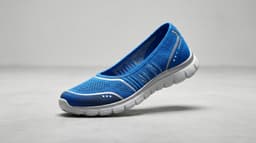
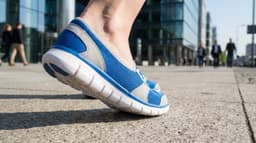

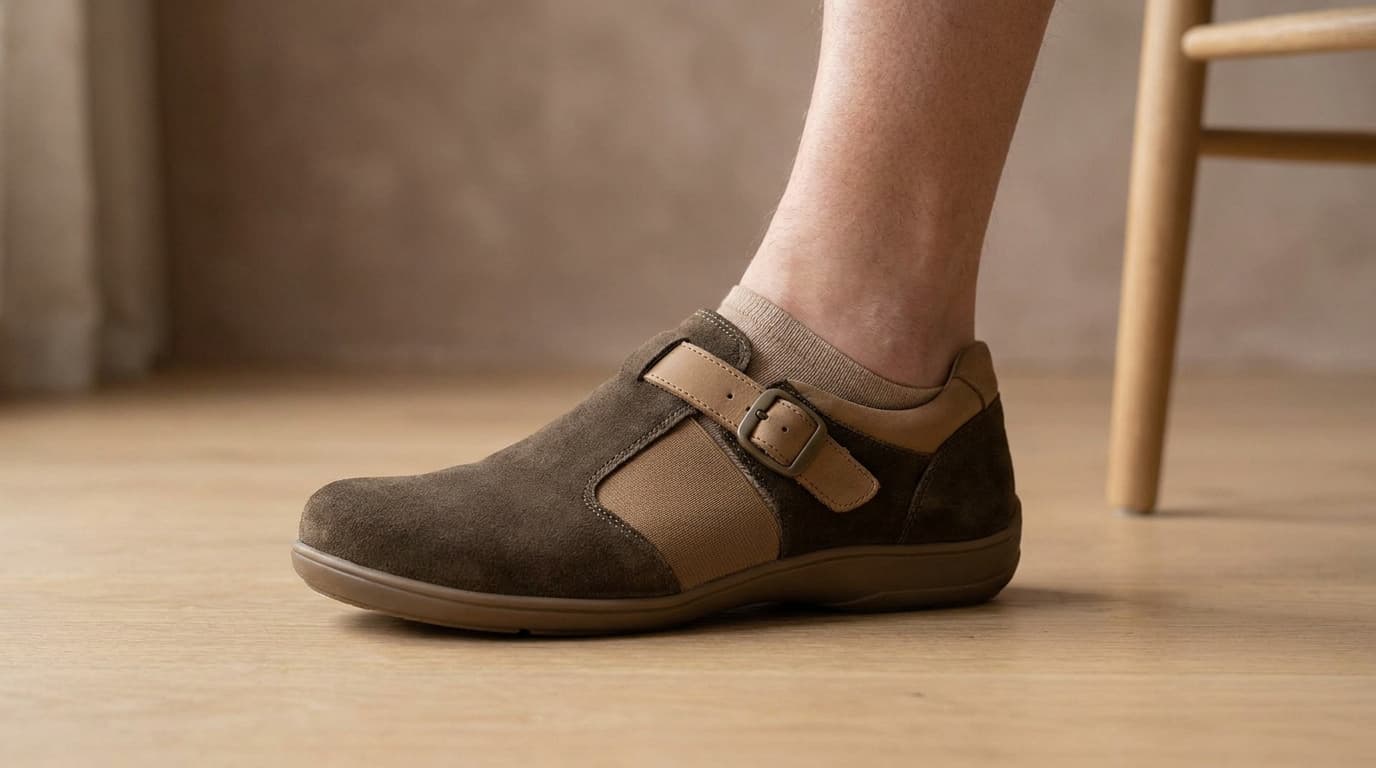
Wearing dedicated shoes with a wide toe box and stretch materials like elastane instantly stops the compression on the bunion. This technical choice stabilizes toe alignment and prevents skin inflammation. 95% of bunion cases affect women, making soft, flat models essential to preserve mobility.
Nearly 30% of the adult population suffers from a deviation of the big toe that triggers painful inflammation where it presses against rigid shoe walls. Conventional shoes compress the joint and often worsen this bony deformity with every step.
Wearing orthopedic shoes for bunions then becomes essential to free up the forefoot and steady your stride. We break down the technical criteria and the right models to regain instant comfort without sacrificing your style.
Why wear orthopedic shoes for bunions?
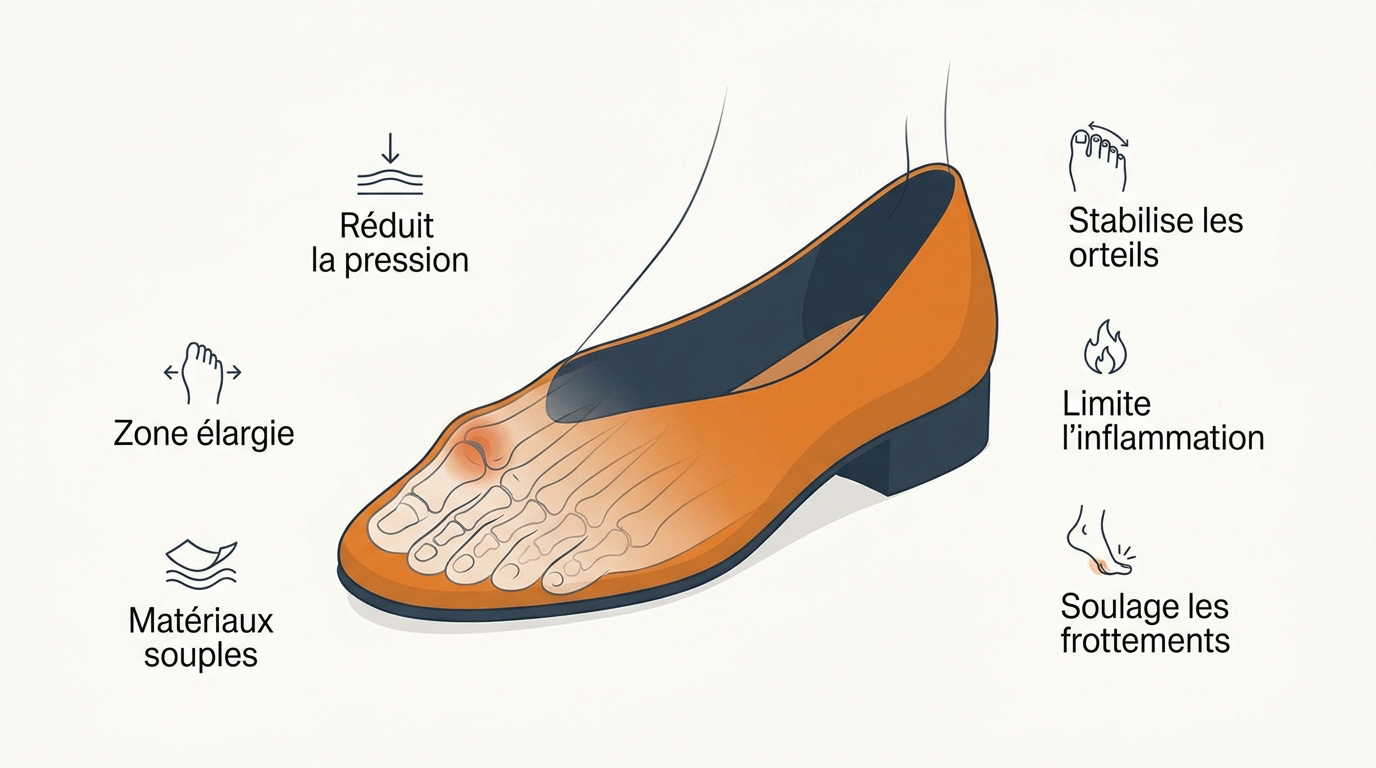
The right shoe reduces pressure on the bunion thanks to a widened forefoot area and soft materials. These models stabilize toe alignment, limiting inflammation and the progression of the bony deformity. That relief starts with removing the direct friction over the sensitive area.
Releasing the pressure points on the bunion
The bunion area is extremely reactive to friction. A dedicated shoe offers extra lateral volume, avoiding painful compression of the joint. This immediately stops the skin from heating up with every step.
By removing the rigid contact points, long walks become possible again without limping. The foot can finally breathe in a space free of any constraint. Comfort becomes the top priority for the wearer.
- Reduced skin redness.
- No more throbbing pain at the end of the day.
- Better blood flow in the forefoot.
Slowing the progression of the deformity
A well-designed structure stops the big toe from drifting further toward the others. It is a simple yet effective mechanical barrier against the deformity getting worse. Alignment is better preserved as a result.
By walking better, you also protect your knees and your back. This avoids the cascade of pain linked to poor posture.
For more detail, see this guide on care and advice for choosing suitable footwear. These recommendations help you maintain healthy mobility.
Wearing these models regularly stabilizes your overall posture. The foot finds a healthier contact with the ground, limiting the risk of future complications.
4 technical criteria for optimal comfort
To choose the right model, looks are not enough; certain technical details make all the difference for your feet.
Forefoot width and roomy fit
Examine the toe box. It must be high and wide so the toes can spread out naturally. That is the secret to avoiding painful overlapping.
Specialized brands often offer wide and extra-wide fittings (2E or 4E), far more generous than the off-the-shelf standard. This accommodates the deformity without warping the shoe itself.
Go for a barefoot shoe to give the toes maximum room. This type of model respects the natural shape of the foot. Freedom of movement is complete.
Material softness and stretch panels
These stretch zones, placed strategically on the inner side, mold around the shape of the bunion without squeezing. They act like a second skin that never compresses.
Quality full-grain leather softens over time. It offers robust protection while staying flexible as the foot bends.
Things to avoid at all costs:
- Seams over the sensitive area create needless friction and sometimes severe irritation.
- Never force a rigid model — instant comfort is the sign that the material is soft enough.
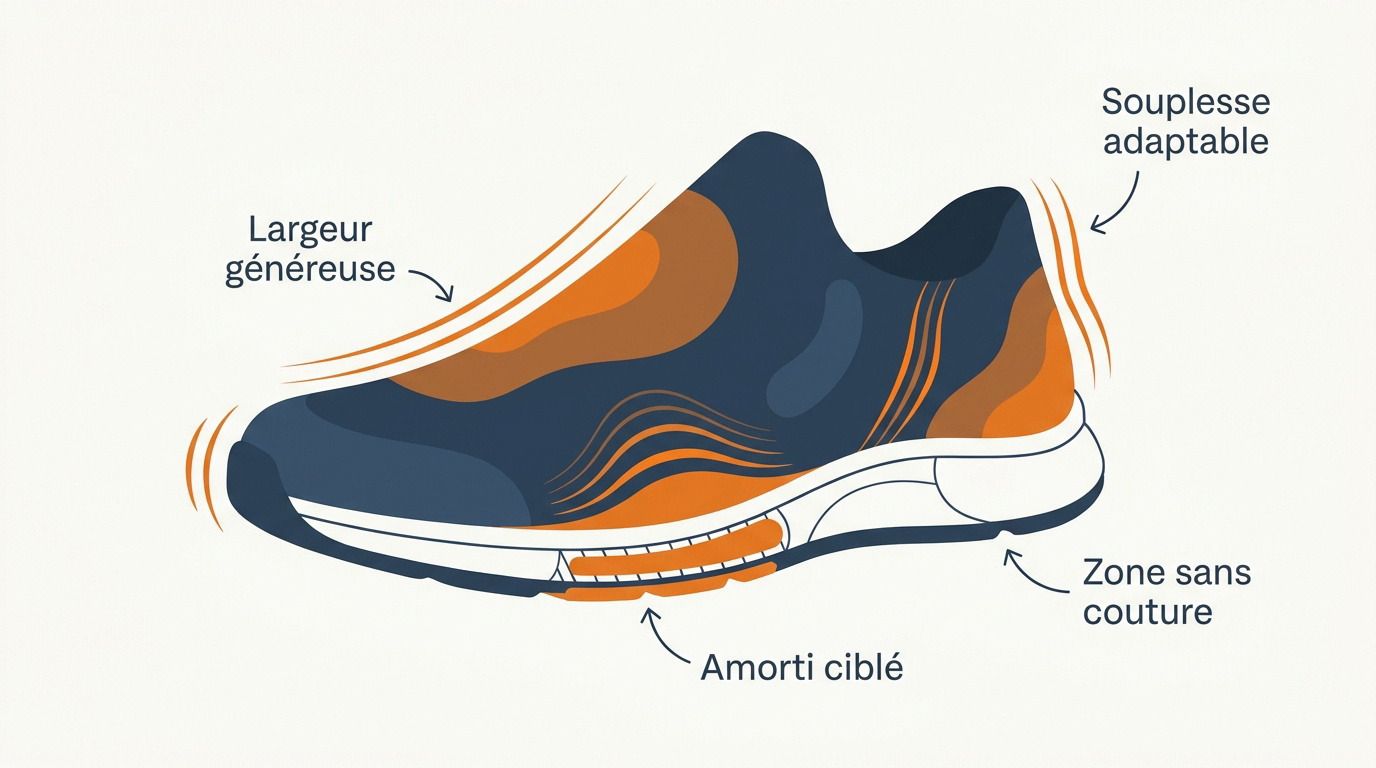
Sole stability and targeted cushioning
Good grip secures your stride and limits twisting movements of the foot. This reduces muscle fatigue at the end of the day.
A technical foam under the metatarsals absorbs impact. This directly relieves the bunion area on ground contact.
| Criterion | Impact on the bunion | Expected benefit |
|---|---|---|
| Forefoot width | Removes lateral compression. | Immediate pain reduction. |
| Material softness | Adapts to the shape of the bunion. | Zero irritating friction. |
| Sole cushioning | Absorbs metatarsal shocks. | Long walks without fatigue. |
| No seams | Eliminates pressure points. | Inflammation prevention. |
How to choose your model by use?
Once you understand the technical criteria, you need to apply them to your daily activities so you never sacrifice your style.
Sneakers for city life
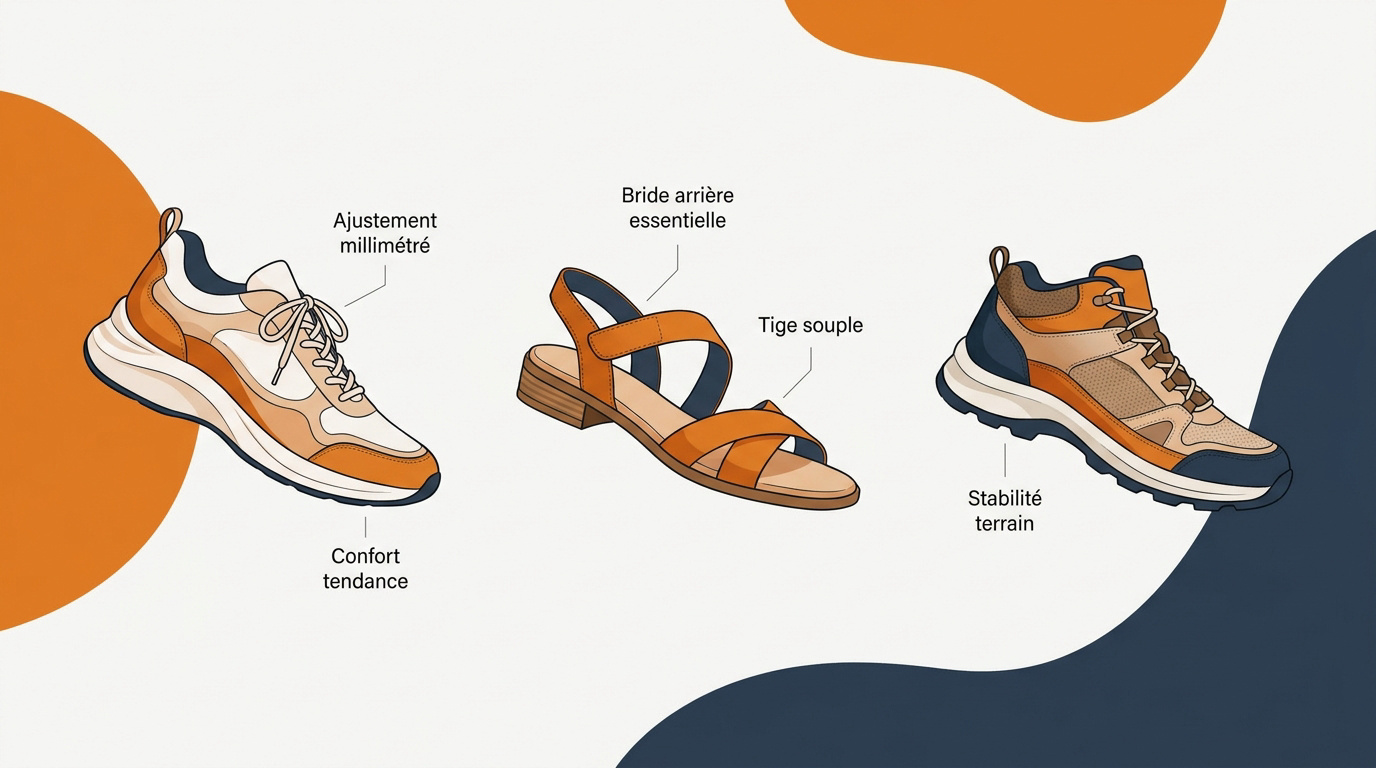
Go for lace-up models. They allow a millimeter-precise adjustment as your feet swell. It is the most versatile option for a tailored fit.
Looks are no longer sacrificed. Today, comfortable sneakers are very much on trend. There is no longer any need to wear medical-looking shoes to feel good.
For an active daily routine, turn to a comfortable ballet flat for women, as this type of model combines softness and urban elegance.
Urban style now adapts to orthopedic needs. Sport brands increasingly build these morphological constraints into their designs.
Sandals and open styles for the warm season
Choose models where the straps do not run directly over the bump. Velcro is perfect to fine-tune the pressure.
Heel hold is essential. A back strap is a must to keep the foot from sliding. This stabilizes your whole stride in summer.
Features to prioritize in your sandals:
- Anatomical footbed.
- Soft leather straps.
- A light, slightly raised outsole to limit tension on the Achilles tendon.
Walking shoes for athletic activities
Look for a flexible upper. On a hike, the foot swells with effort. A flexible upper follows that movement without creating dangerous friction zones.
Handling the terrain calls for precision. On uneven ground, stability is paramount. A wide sole offers a better support base to relieve the forefoot.
Physical activity remains possible despite a bunion. You simply need to choose gear that respects your specific anatomy.
Alternatives and care to relieve your feet
Alongside a good pair of shoes, other solutions exist to ease your daily pain.
Using orthotic insoles and splints
A custom insole corrects faulty support points inside the shoe. It works in perfect harmony with your footwear. It is the winning duo for total comfort.
Think about toe spreaders too. Worn at night or at rest, they keep the space between the toes. This relaxes the ligaments often left too tight by the deformity.
Always see a podiatrist for an accurate diagnosis. Every foot is unique and needs a personalized, tailored response.
A daytime splint can also help. It slips easily into your new wide shoes for continuous support.
Possible alterations at a cobbler
A professional can locally widen the leather over the bunion. To do this, they use a stretching last. It is an effective technique to gain a few precious millimeters.
Favor genuine leather shoes for these alterations. Synthetic materials cope far worse with forced stretching. Leather remains the alterable material par excellence.
- Average cost: varies depending on the professional's assessment.
- Time needed: a few days on the stretching last.
- Compatibility: city shoes, ankle boots, leather boots.
- Limits: ineffective on low-stretch synthetic textiles.
Key takeaway: Prioritize forefoot width, the softness of elastane and the absence of seams to stop inflammation. Adopting orthopedic shoes for bunions guarantees instant comfort and stabilizes your posture. Act now to preserve your mobility and walk pain-free.
FAQ
Why choose shoes specifically designed for bunions?
Why choose shoes specifically designed for bunions?
Wearing the right shoes immediately stops the pain over the bunion. These models offer extra volume at the forefoot and use stretch materials to accommodate the deformity without compression. This limits skin inflammation and stabilizes toe alignment. Wearing specific shoes also helps slow the progression of the bony deformity. By offering a healthier contact with the ground, they avoid the painful muscular compensations in the knees and back.
What are the technical features of a good shoe for deformed feet?
What are the technical features of a good shoe for deformed feet?
Four criteria are essential: a wide toe box (wide-fitting widths such as 2E or 4E), the use of soft materials like elastane, a stable sole with targeted cushioning, and the complete absence of seams over the sensitive area. These elements guarantee instant comfort and protection against irritation.
How do I measure my foot width to choose the right model?
How do I measure my foot width to choose the right model?
Measure your foot at the end of the day, when it is most swollen. Use a tape measure at the widest point, between the big-toe joint and the little toe. Then refer to the size correspondences: standard width is D for men and B for women, while wide and extra-wide fittings (2E, 4E and beyond) are designed for wide or pathological feet.
Is soft leather better than elastane for a bunion?
Is soft leather better than elastane for a bunion?
Elastane is often preferred for its ability to mold perfectly around the bunion with no pressure at all. Soft leather remains an excellent option if it is high quality and the shoe offers enough volume. Hybrid models combining leather and stretch panels deliver the best compromise between looks and comfort.
Can I wear athletic shoes with a bunion?
Can I wear athletic shoes with a bunion?
Yes, lace-up sneakers are actually recommended because they allow a precise width adjustment. Look for models with a flexible upper and a wide sole to ensure good stability during exercise. Many sport brands now build these morphological constraints into their everyday designs.
Can a cobbler adapt my current shoes?
Can a cobbler adapt my current shoes?
A skilled cobbler can use a stretching last to locally widen the leather over the bump. This professional technique gains a few precious millimeters. Note that it works mainly on genuine leather and far less on synthetic materials.
What complementary solutions exist to relieve the pain?
What complementary solutions exist to relieve the pain?
Alongside wide shoes, custom orthotic insoles help correct your support points. Wearing night splints or toe spreaders helps relax the ligaments. It is also advisable to walk barefoot at home and to see a podiatrist regularly for personalized follow-up.


Loading...