
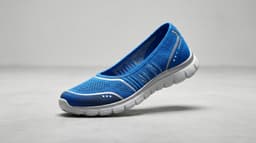

Relieving a bunion calls for shoes in specific wide widths (G, H or K), made from stretchy materials like soft leather or mesh. A flat heel under 2 cm preserves alignment and limits pressure. Prioritize models with no internal seams to eliminate any painful friction.
Nearly 30% of the adult population suffers from a deviation of the big toe, a deformity that often turns shoe shopping into a real technical challenge. When it comes to bunions, which shoes should you choose to stop the inflammation and rediscover smooth, comfortable walking?
Wearing models that are too narrow or too stiff increases the pressure on the bunion and, unfortunately, speeds up the progression of the condition. Together we'll break down the width criteria and the stretchy materials to help you pick a pair that combines comfort and style.
Shoes for bunions: what to prioritize for your feet
Relieving a bunion requires shoes in widths G, H or K, made from soft leather or stretch mesh. A flat heel under two centimeters preserves the alignment of the big toe.
This foot shape first calls for understanding the system of specific widths in order to free up the forefoot.
Prioritize room with widths G, H and K
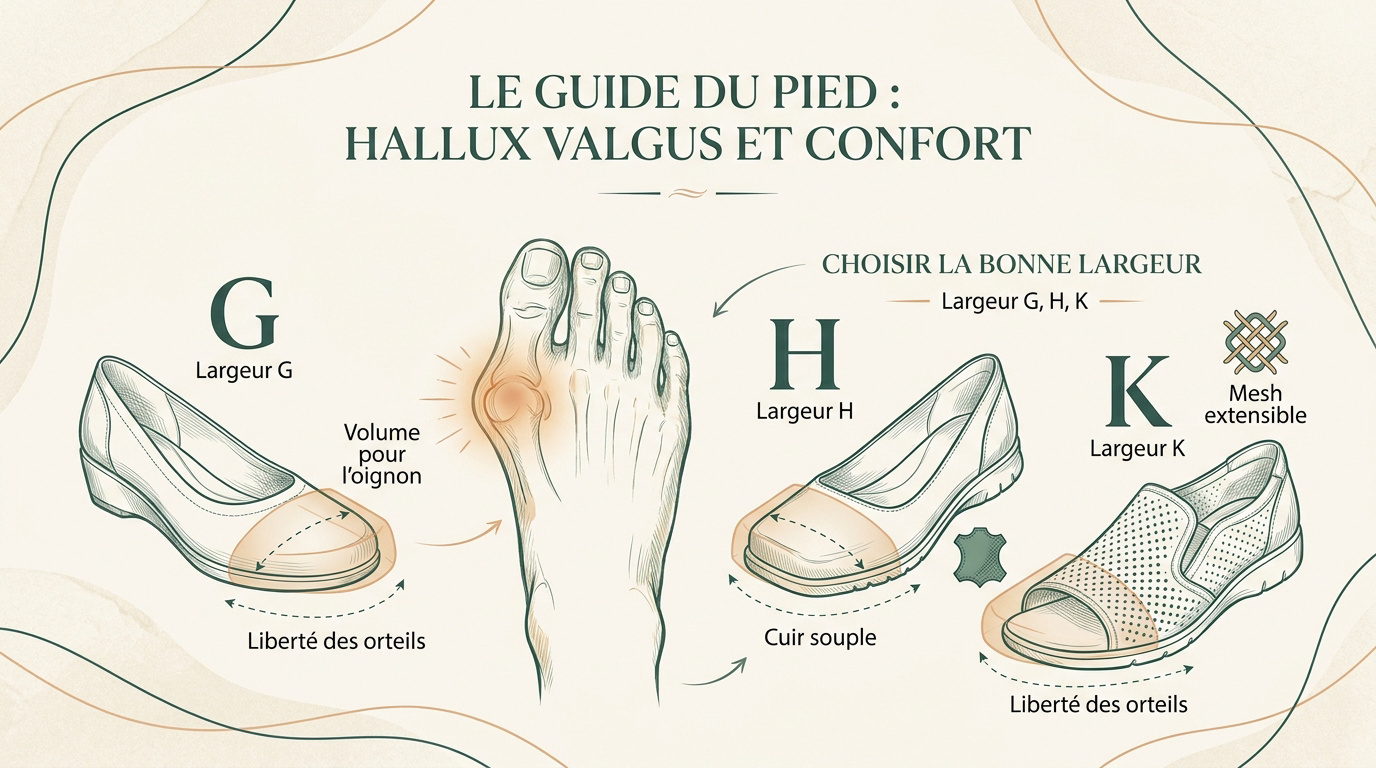
Standard models often compress the bunion because they are too narrow. The G, H and K widths offer extra volume. These specific measurements guarantee enough space across the forefoot. They prevent any painful pressure on the deformed area.
Freedom of movement remains essential for your toes. Adequate room limits irritating friction. This helps slow the worsening of the bony deformity. Your day-to-day comfort depends on this spatial ease.
- Width G for a slightly broad foot.
- Width H for a wide foot.
- Width K for a very wide foot.
Soft leather and mesh for maximum flexibility
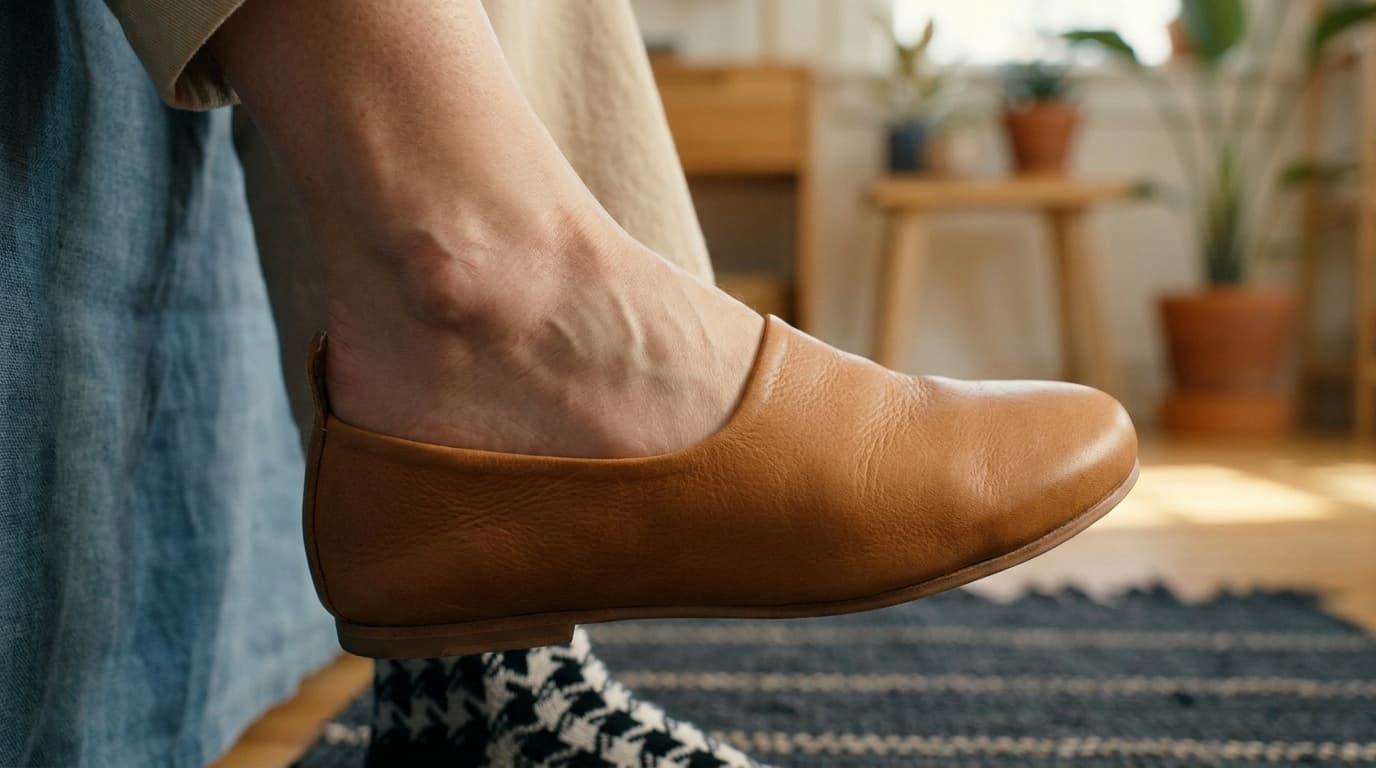
Favor materials that mold perfectly to your foot shape. Lambskin or deerskin leather remains ideal. Technical mesh also guarantees optimal stretch. These textiles avoid rigid points of resistance.
These materials reduce the pressure on the sensitive area. The foot breathes without unnecessary compression. Relief is immediate as you walk. This is the solution for everyday wear without suffering.
Flexibility effectively prevents skin inflammation. A rigid structure injures the bunion continuously. Stretchy fabrics follow every natural movement. Thermal comfort is also a major advantage.
3 technical points to eliminate friction
Beyond room, the very structure of the sole and the interior determines the level of relief.
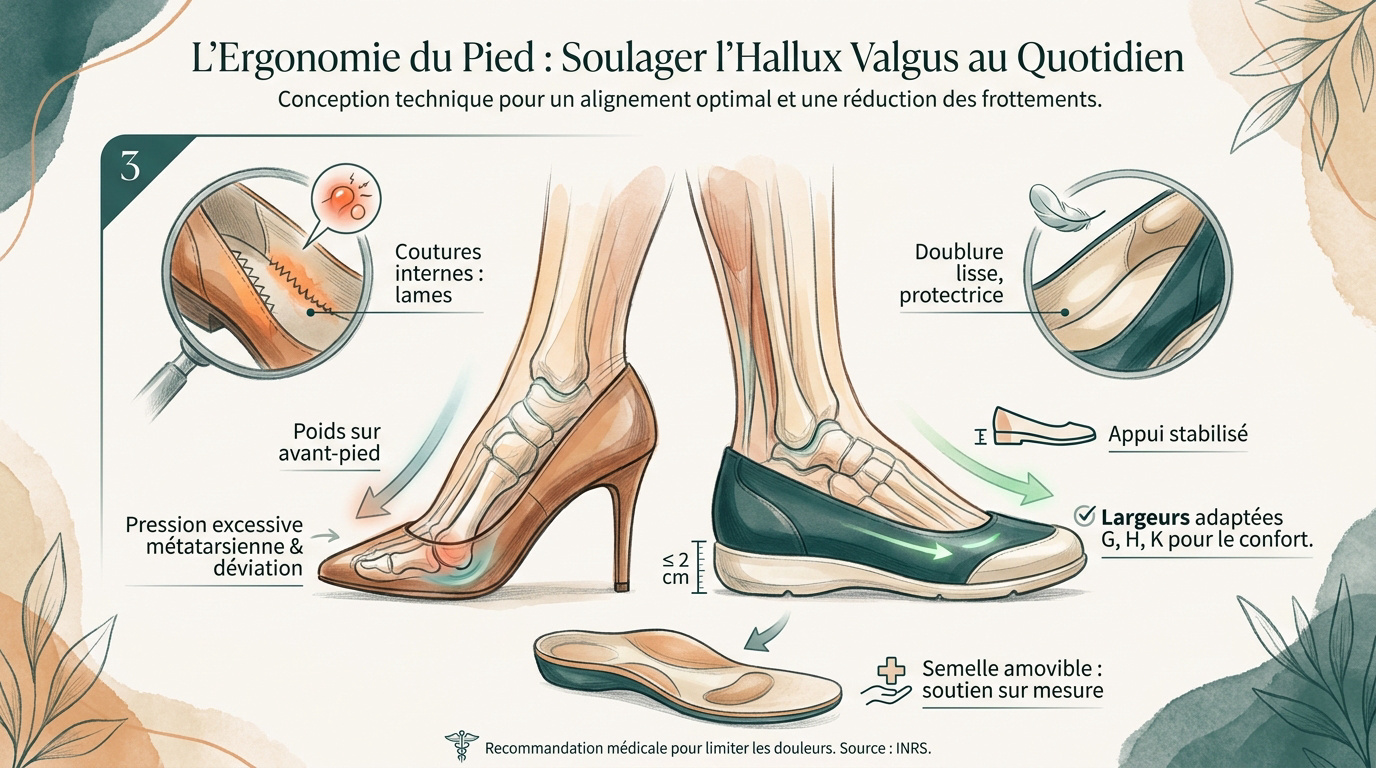
How a flat heel affects big-toe alignment
High heels tip the body weight onto the forefoot. This excessive pressure crushes the metatarsals. It unfortunately speeds up the deviation of the big toe.
Opt for a flat or very low heel. A maximum height of two centimeters is recommended by experts. This helps stabilize your stance on the ground effectively.
Choosing the right shoes is a medical recommendation to limit pain, notably through the screening of podiatric abnormalities. A neutral gait encourages a natural distribution of the load.
Seamless construction and removable insoles
Internal seams placed over the bunion act like real blades. They cause painful irritation and blisters.
Look for models with a smooth, protective lining. The absence of internal ridges is a mark of quality. This protects the thin skin of the deformed area. It's a detail that changes everything.
The prescription of foot orthotics often requires a removable insole. This lets you easily fit your own orthopedic corrections for tailored support. You gain both depth and comfort.
Shoe styles compatible with your daily life
Thankfully, comfort no longer means sacrificing style, as plenty of urban models now build in these technologies.
Sneakers and derbies for secure support
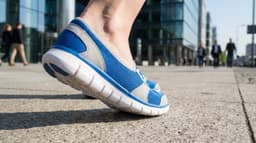
Modern sneakers offer optimal midfoot hold. This stops the foot from sliding forward. The pressure on the toes is therefore better distributed.
Laces allow a precise, personalized fit. You can loosen the lacing at the front to free the bunion. Soft leather derbies are an excellent, elegant alternative.
Go for solutions for sensitive feet that reduce everyday friction. Your walking comfort depends directly on it.
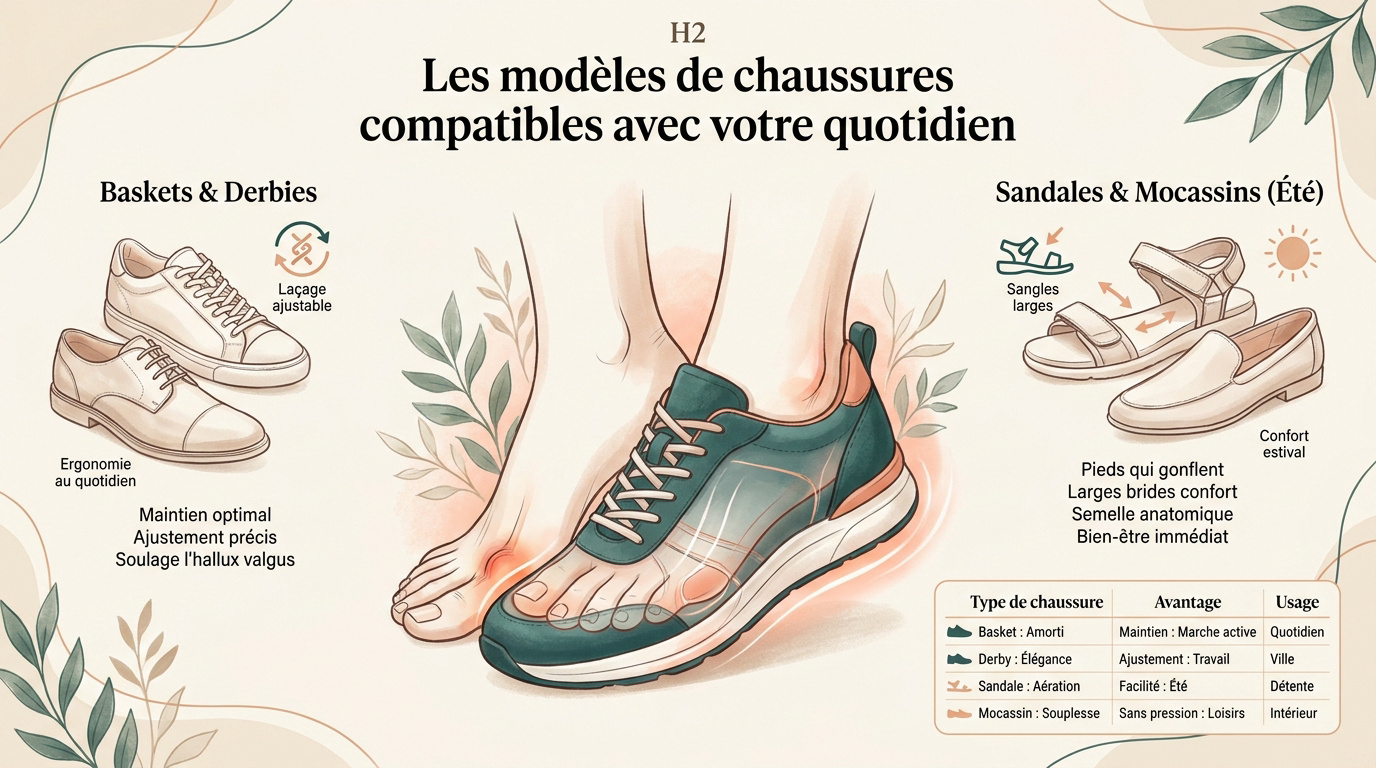
Sandals and loafers for a pain-free summer
In summer, the foot tends to swell more. You should avoid sandals with thin straps crossing over the bunion. Choose models with wide hook-and-loop straps.
Anatomically preformed insoles support the arch. They thus relieve the big-toe area as you walk. Loafers with no rigid seams are also very comfortable. Well-being is immediate.
Sneaker
Optimal forefoot hold with lace-up adjustment
Derby
Soft-leather elegance with no compression on the bunion
Sandal
Maximum airflow with wide adjustable straps
Loafer
Flexibility and no rigid seams for immediate comfort
Expert tips so you never get it wrong in store
To validate your choice, a few simple tricks when trying shoes on will help you avoid costly mistakes.
Why trying on your shoes in the evening changes everything
The volume of your feet varies throughout the day. By evening, they are naturally more swollen from fatigue. That's the ideal moment to try them on.
A shoe bought in the morning can become an instrument of torture by 6 p.m. By testing at the end of the day, you guarantee permanent comfort. It's a golden rule for bunions.
Discover the benefits of barefoot shoes and their zero-drop concept to rediscover the foot's natural freedom. This kind of model respects your anatomy without constraint.
The test for internal space and stability
Standing up, check that you can move your toes freely. The big toe should never touch the front.
Walk around the store for a few minutes with both shoes. Test the heel's stability and the absence of tilting. The foot should stay well anchored without being squeezed. The sensation should feel natural.
In-store fitting checklist:
- 1 cm of room in front of the toes
- No hard spot over the bunion
- Perfect lateral stability
- A flexible sole
Favor widths G, H or K and soft materials like leather or mesh to free your toes. Choose a flat heel and a seamless construction right now to stop the painful friction. Picking the ideal shoes for your bunions guarantees immediate comfort and lastingly preserves your mobility. Rediscover, at last, the pleasure of walking without pain.
FAQ
What type of shoe is best for relieving a bunion?
What type of shoe is best for relieving a bunion?
For optimal comfort, choose models that offer plenty of room across the forefoot. Wide-width shoes (G, H or K in European sizing) are specifically designed to free the bunion from any lateral pressure. Favor round or square toe shapes to allow your toes full mobility. As for materials, choose absolute softness: lambskin or deerskin leather, or stretch mesh, all mold to the deformity without compression. A perfect fit right from the fitting is essential to prevent the condition from worsening.
What heel height is recommended so you don't make the bunion worse?
What heel height is recommended so you don't make the bunion worse?
The golden rule is to keep the heel height to 2 centimeters (about 0.8 inch) at most. A flat or very low heel lets the body weight spread naturally across the whole foot, avoiding overload on the metatarsals and further deviation of the big toe. Wearing heels higher than 45 mm is strongly discouraged. Too pronounced an arch tips the weight forward, increasing tension and inflammatory pain over the bunion area.
What technical details are essential for foot comfort?
What technical details are essential for foot comfort?
Always look for a seamless internal construction over the bump. Rigid seams act as irritating friction points. A smooth lining, sometimes padded with foam or neoprene, offers gentle protection against everyday rubbing. Also check for removable insoles. This feature is essential so you can fit your own foot orthotics without reducing the internal space. A lace or hook-and-loop closure lets you adjust the fit depending on how much your feet swell.
Which shoe styles are compatible with a bunion?
Which shoe styles are compatible with a bunion?
Plenty of stylish options exist: modern sneakers for secure support, soft leather derbies for work, or seamless loafers. In summer, favor sandals with wide adjustable straps that don't cut across the sensitive area. The key is to pick a model that combines style and technical features. The comfort should be immediate. For personalized advice suited to your foot shape, a visit to a podiatrist is still strongly recommended.
When is the best time to try on new shoes?
When is the best time to try on new shoes?
The ideal time to try them on is the end of the day. Your feet tend to swell after a few hours of walking or standing. Testing your shoes in the evening guarantees they will stay comfortable in all circumstances, even at peak fatigue. Don't forget to run the internal-space test: you should be able to move your toes freely and have about 1 cm (0.4 inch) of room at the front. A shoe that pinches in the morning will become unbearable by the end of the day.


Loading...