
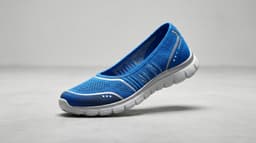

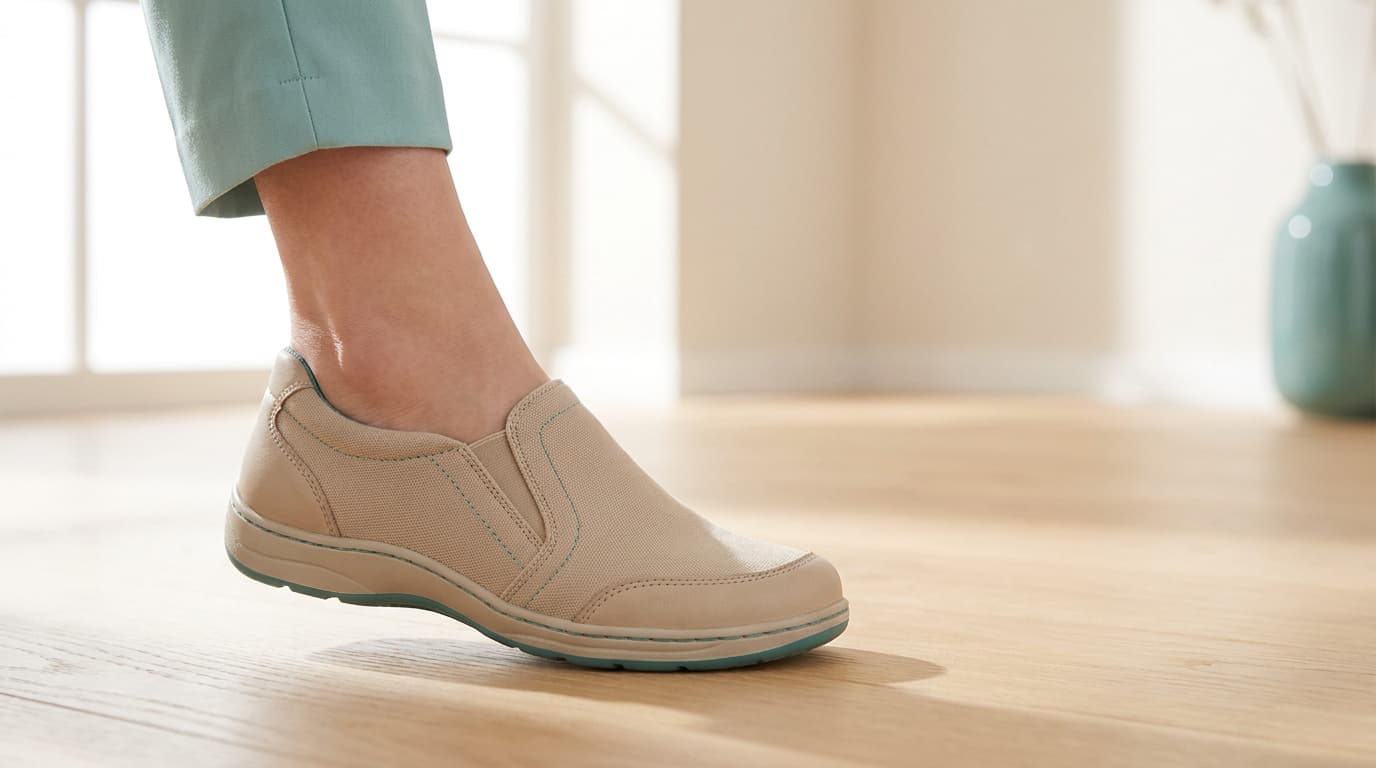
Go for an H or K width and stretch materials like deerskin leather to free up the forefoot. A seam-free internal design eliminates painful rubbing on the bunion. This technical comfort prevents inflammation and stabilizes your stride.
Nearly 30% of the adult female population suffers from a deviation of the big toe, a common misalignment that widens the ball of the foot. Finding a women's shoe for bunions that combines looks and comfort then becomes a daily challenge to avoid inflammatory pain.
Wearing models that are too narrow or have high heels increases pressure on the bunion and worsens the deformity. Here we break down the technical criteria and the stretch materials you need to walk freely while staying elegant.
👟 Women's shoes for bunions: comfort criteria
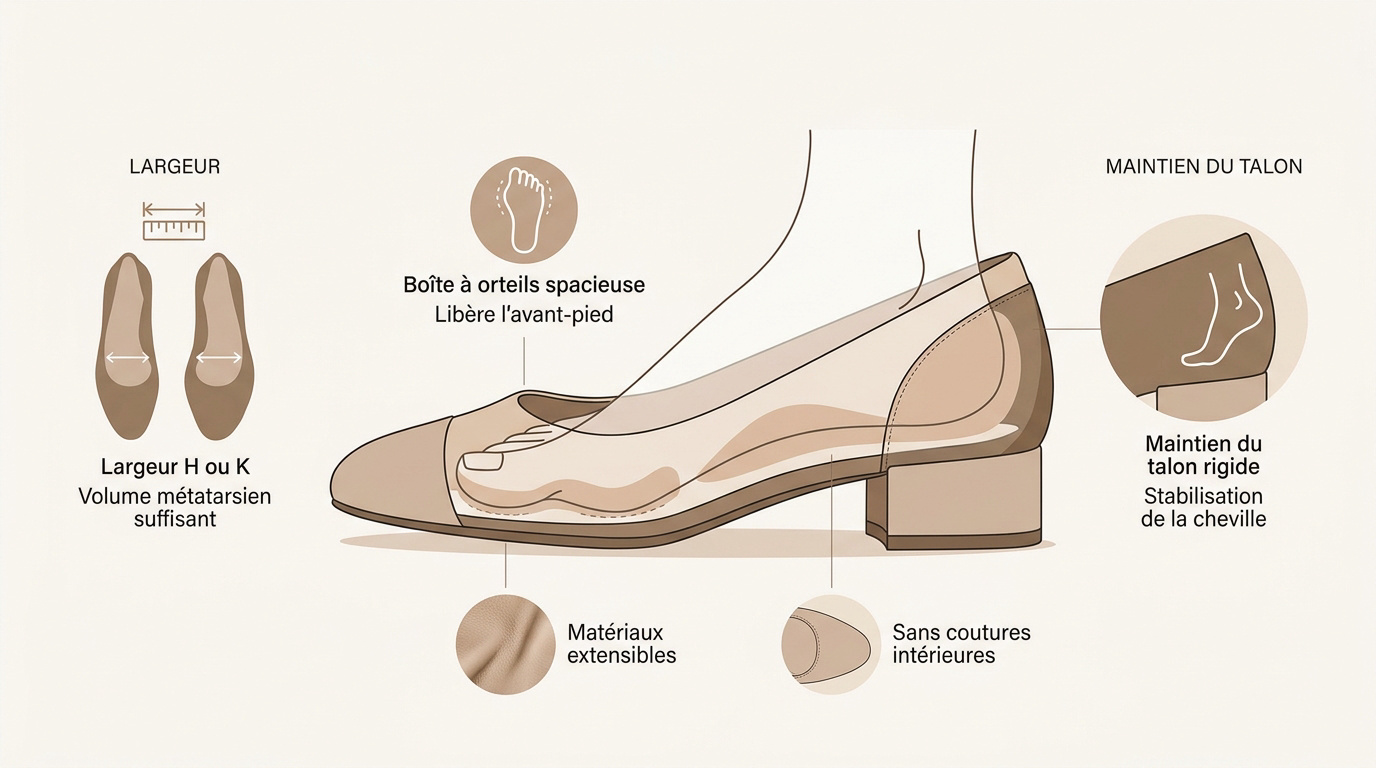
To relieve a bunion, prioritize an H or K width, stretch materials like deerskin leather and the absence of internal seams. These technical features guarantee enough metatarsal volume to free up the forefoot.
Moving to a suitable metatarsal volume directly answers the need for space that is essential for your toes.
Forefoot space and the H width
A bunion needs a roomy toe box. Limited volume increases pressure on the joint. This causes sharp, inflammatory daily pain.
Look for H (comfort) or K (extra-wide) widths. These standards offer more room than classic models. They prevent lateral compression of the foot. It's a major selection criterion.
To deepen your knowledge, check out our dedicated bunion guide.
Foot stability starts with firm support at the back of the foot to limit joint deviations.
Heel hold and rearfoot stability
A rigid heel counter stabilizes the ankle. This stops the foot from collapsing inward. Correcting posture begins with a well-held heel.
If the heel slips, the toes clench at the front. This clawing movement worsens the deformity of the big toe. Good support limits this mechanical risk.
Recommended closure systems:
- Strap or precise lacing to lock the foot in place
- Velcro for a millimeter-precise fit without compressing the sensitive area
- A flexible upper around the ankle to adapt to volume changes
🧵 Materials and technical design for sensitive feet
After checking the structure of the shoe, you need to focus on the materials that come into direct contact with the foot.
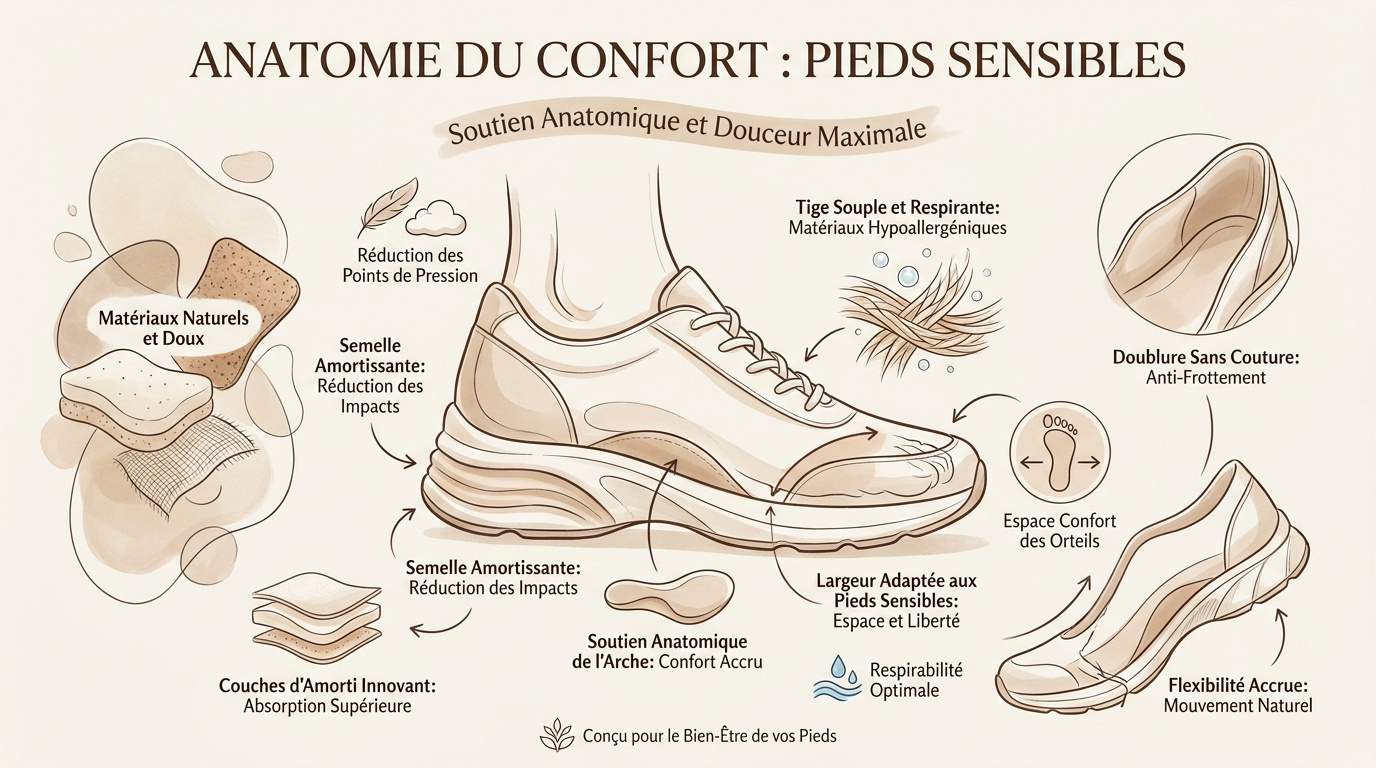
Stretch leathers and soft textiles
Deerskin leather is especially recommended. Its natural suppleness lets it mold to the shape of the bump. It creates no painful resistance while walking.
Stretch textiles or technical knits are also excellent options. These materials give way exactly where the foot needs them to. They offer a second-skin feel.
The French brand Laguier® is a benchmark. It uses modern designs and orthopedic expertise for plantar well-being. Their models combine elegance and technical know-how.
No seams over pressure zones
Internal seams are true enemies. Placed over the first metatarsal, a seam can cause rubbing. This often leads to redness or blisters.
Favor smooth, continuous linings. A seam-free design drastically reduces skin irritation. It's a technical detail that is often overlooked yet essential for everyday use.
Technical features to look for:
- Breathable microfiber lining
- No rigid reinforcements over the bunion
- Localized foam padding
👠 Shoe styles suited to a foot bunion
Technical comfort doesn't mean sacrificing style, because several modern designs meet these needs perfectly.
Sneakers and trainers with cushioned soles
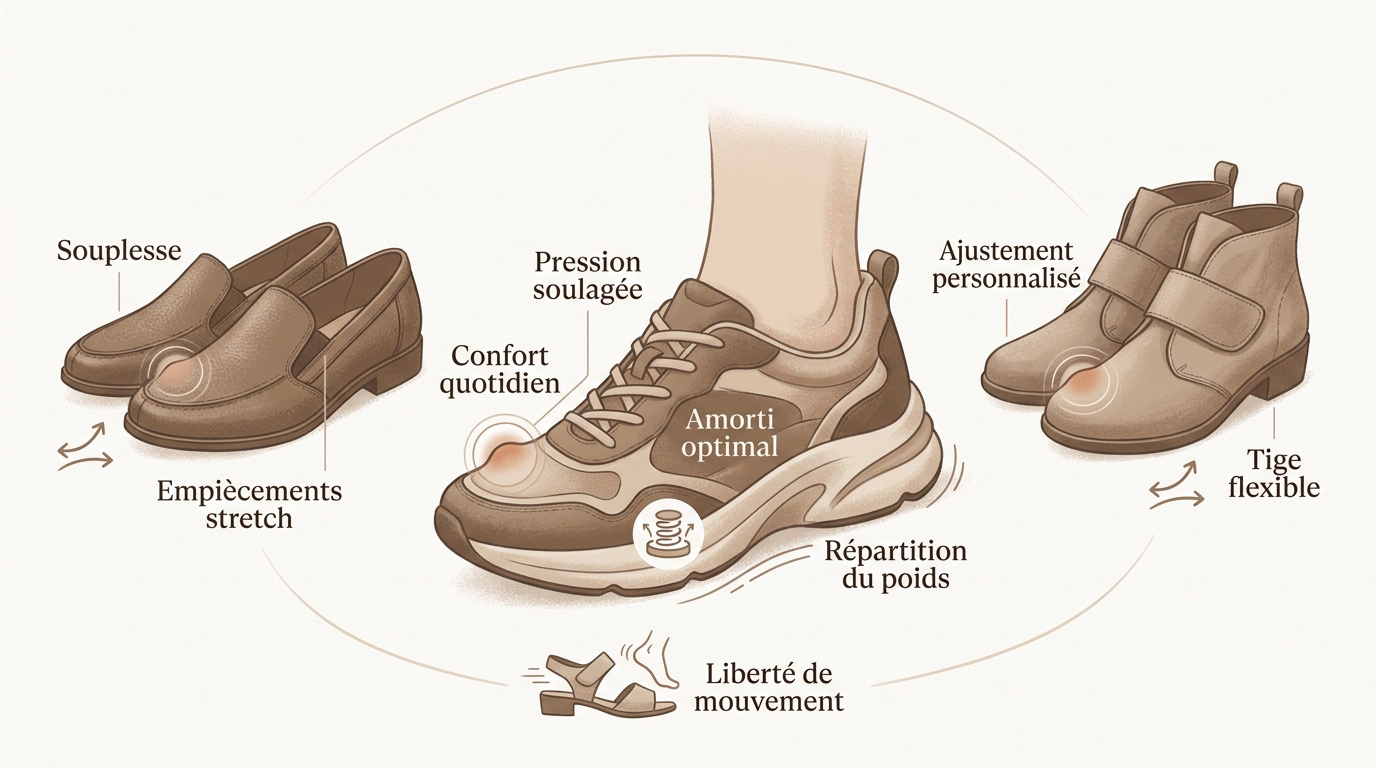
Sneakers are the ideal everyday companions. They spread your body weight across the whole sole. This relieves the excess pressure placed on the front of the foot.
A low drop is preferable to avoid tipping forward. For more on this technology, see our article on barefoot shoes. The rolling motion of your step then becomes more natural.
Sneaker
Optimal cushioning to spread weight across the whole sole
Loafer
Natural flexibility with discreet elastic gussets
Ankle boot
Reinforced hold with a flexible upper and Velcro closure
Sandal
Maximum freedom for sensitive feet in the summer months
Ankle boots and loafers with a flexible upper
For work, loafers with elastic gussets are perfect. These stretch panels hide discreetly in the design. They let you keep an elegant look without suffering.
Ankle boots with a Velcro closure offer a millimeter-precise fit. You can loosen the shoe if your foot swells. This flexibility is essential for long days. The upper should stay soft around the ankle.
This type of model adapts to volume changes. It's a smart choice to stay chic and comfortable.
📏 3 tips for choosing the right size
Once you've identified the ideal model, one crucial step remains: making sure the size you choose is really the right one.
Measure your foot at the end of the day
Feet tend to swell over the course of the day. Blood circulation and standing increase their volume. You need to factor this in when buying.
Try shoes on in the late afternoon only. That's when your foot is at its widest. This way you avoid buying shoes that are too tight the next day.
Watch out when trying shoes on:
A morning fitting is often misleading. Always allow for this safety margin to guarantee your comfort over time.
Compatibility with orthopedic insoles
Always check whether the original insole is removable. This lets you slip in your own orthotics without compressing the foot. It's a non-negotiable point for effective correction.
The Laguier Bunion Kit offers solutions such as night splints and soft orthotics to slow the deformity. These devices require a suitable internal volume.
A fixed insole reduces the available space. Make sure the internal volume stays sufficient once your medical device is in place.
Free your feet right now by prioritizing an H or K width, stretch materials like deerskin leather and a seam-free internal design. Choosing the right women's shoe for bunions guarantees pain-free days and a stable stride. Finally rediscover the pleasure of walking with elegance and comfort.
FAQ
What are the best shoes for bunions for women?
What are the best shoes for bunions for women?
Go for models with a wide forefoot and a roomy toe box to avoid any compression. Shoes made from deerskin leather or stretch textiles are ideal because they mold to the shape of the bunion without creating painful pressure points. Always opt for comfort widths such as H or K. These standards guarantee enough metatarsal volume, essential to free up the big toe joint and provide immediate relief from the very first fitting.
How do I choose the right size for feet with bunions?
How do I choose the right size for feet with bunions?
Take your measurements and try shoes on at the end of the day, when the foot is at its largest volume. This lets you anticipate the natural swelling linked to standing and avoid buying shoes that are too narrow and would become painful after a few hours. Make sure the heel is firmly held to stabilize the ankle and stop the foot from sliding forward. Good rearfoot support limits the clawing motion of the toes, an aggravating mechanical factor for the bunion deformity.
Can you wear heels with a bunion?
Can you wear heels with a bunion?
Wearing high heels is strongly discouraged because it shifts your body weight onto the front of the foot, increasing pressure on the metatarsals. Choose a low heel (under 5 cm) or none at all to encourage a balanced load distribution and a natural roll of the step. Absolutely avoid pumps and pointed toes. If you're after elegance, turn instead to loafers or ankle boots with a flexible upper that include discreet elastic gussets to combine style and orthopedic comfort.
Why choose shoes with no internal seams?
Why choose shoes with no internal seams?
Having no seams over sensitive areas is essential to prevent direct rubbing on the bunion. A smooth, continuous lining drastically reduces the risk of redness, blisters and skin inflammation around the first metatarsal. Some specialized models use microfiber linings or localized foam padding. These technical designs act like a second skin, offering gentle, flexible protection suited to even the most sensitive feet.
Are orthopedic insoles compatible with these shoes?
Are orthopedic insoles compatible with these shoes?
Yes, as long as you choose shoes with removable insoles. This lets you swap the original insole for your own custom orthotics without reducing the space available inside the shoe. Using medical devices, such as those in the Laguier Bunion Kit, helps to slow the deformity. Make sure the internal volume stays sufficient once the orthotic is in place to maintain optimal blood circulation.


Loading...