
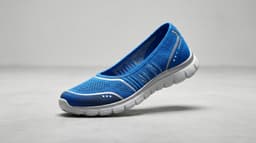


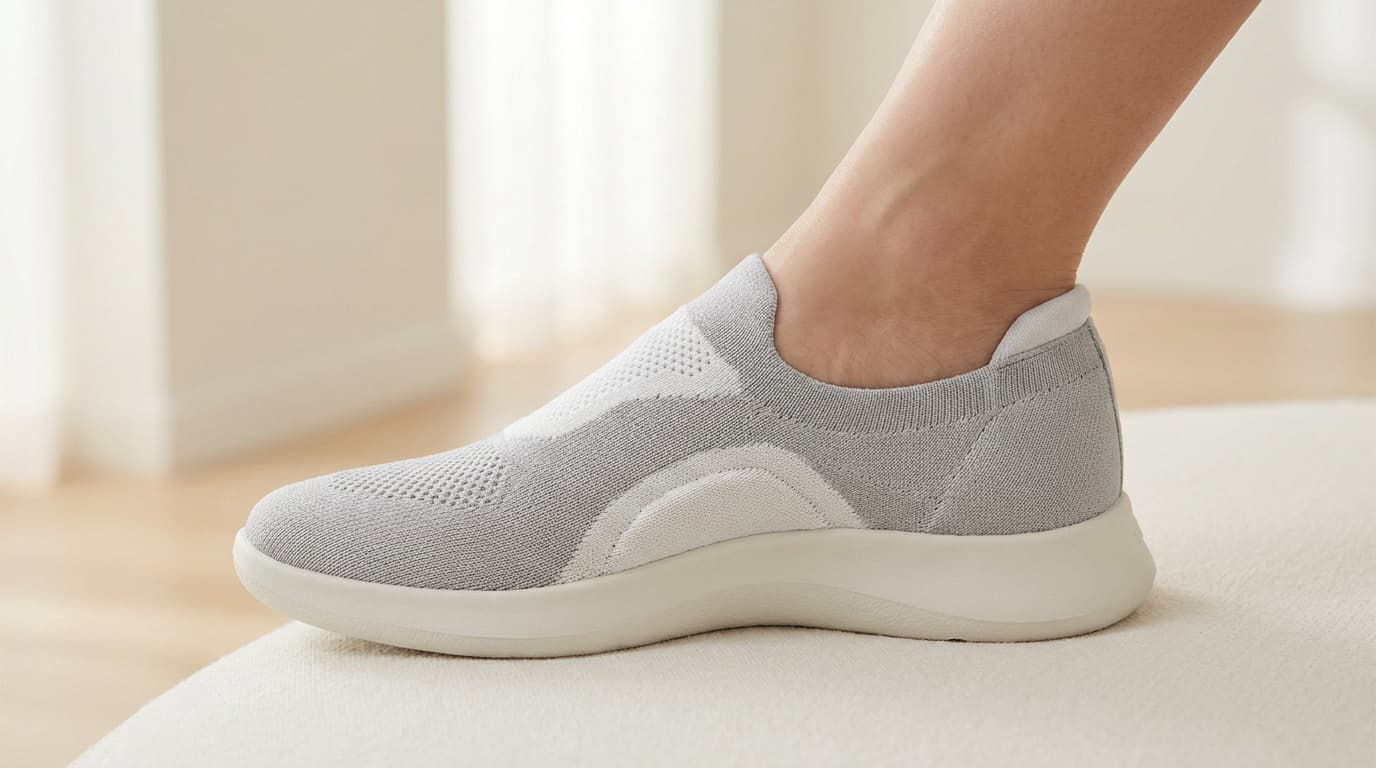
Choosing very wide or extra wide widths adds 15 to 25% more volume, which is essential to free the bunion with no compression. That extra room, paired with stretch fabrics, delivers instant comfort and greater stability. Measuring your forefoot in the evening guarantees the perfect choice.
An extra wide shoe offers 15 to 25% more interior volume than the standard widths on the market. That specific extra room finally lets you free the joint without sacrificing the look of your shoes.
Finding extra wide shoes for bunions becomes a real challenge when compression turns every step into an ordeal. We break down the technical solutions and the precise measurements to help you get back to instant, pain-free walking.
Why choose extra wide shoes for bunions?
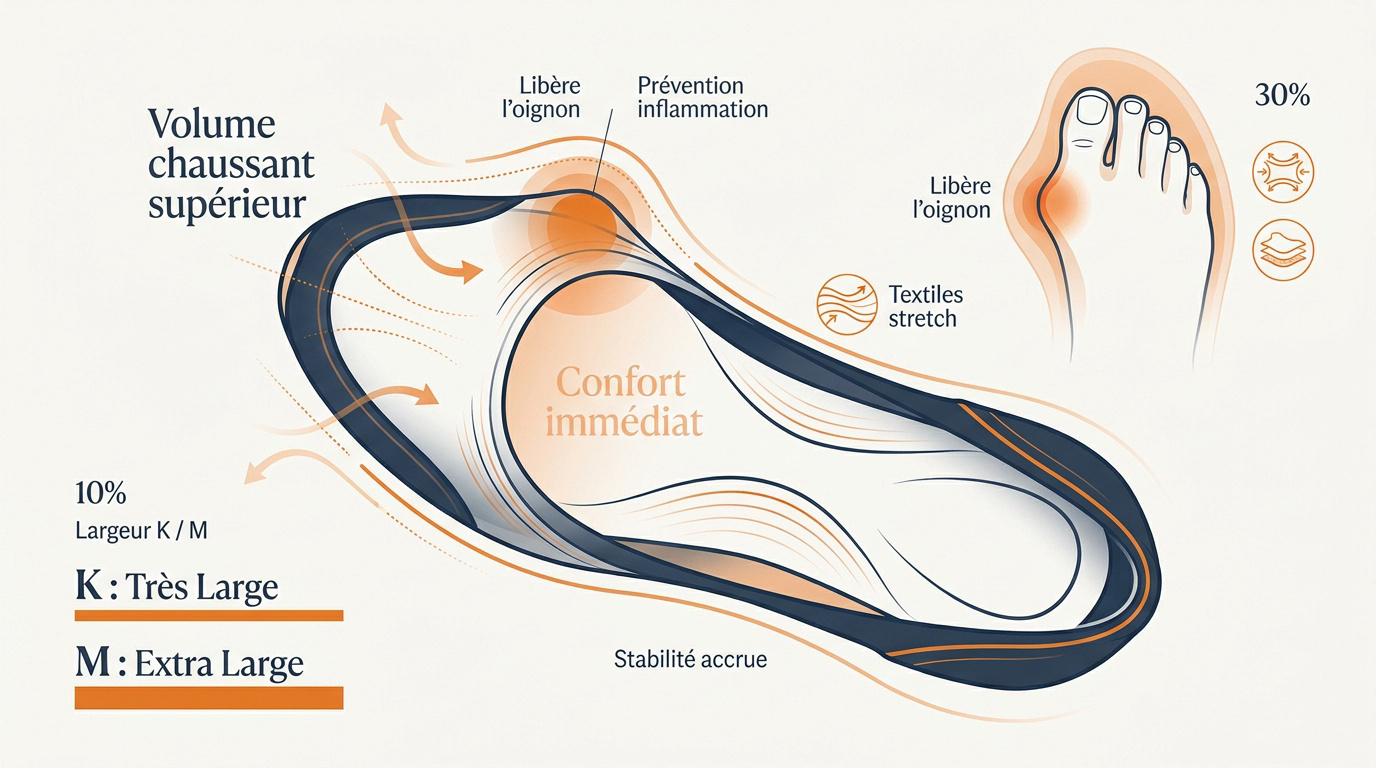
Extra wide and very wide widths offer 15 to 25% more interior volume than the standard fit. That extra room, paired with stretch fabrics, removes the pressure on the bunion and prevents metatarsal inflammation.
Going from a standard last to an extra wide fitting radically transforms your daily life by eliminating the critical friction points over the bunion area.
Free the bunion area thanks to extra volume
More room across the forefoot removes painful rubbing. This space lets the toes align with no mechanical strain. You feel instant comfort from the very first try-on.
It is a genuine relief for compressed feet, especially if you also learn how to choose the right shoes for bunions to guarantee optimal support.
This specific extra width prevents redness. It also limits blisters over the bunion bump.
You finally regain total freedom of movement. Every step feels lighter and more natural.
Understanding wide vs. extra wide width codes
Standard width labels (B for women, D for men) mark normal feet. Wide widths (D for women, E for men) add a little room, but they often fall short for a pronounced bunion. Extra wide and very wide widths go well beyond these standards.
The footbed is far roomier. This wider base keeps the foot from spilling over the edges. You enjoy greater stability as you walk.
Here are the key reference points to guide you:
- Standard width: regular fit
- Wide width: light comfort margin
- Extra wide width: very generous fit
- Very wide / therapeutic width: maximum room for severe bunions
Picking the right width changes everything. Your walking experience finally becomes pleasant instead of painful.
3 technical features for instant comfort
Beyond raw volume, the technical quality of the materials plays a decisive role in managing bunion pain.
Favor stretch fabrics and soft leather
Stretchy materials are essential to your comfort. They mold to the shape of the bunion without applying pressure. This elasticity heads off immediate spikes of pain. The foot can finally breathe freely.
Bet on deerskin or lambskin leather. These natural hides offer extreme softness. They gradually relax to perfectly match your foot shape. It is a durable, high-quality choice.
For optimal relief, explore our selection of orthopedic shoes for women. These models are designed specifically for sensitive feet.
Softness eliminates friction. The conflict zones disappear completely.
Stabilize your gait with proper arch support
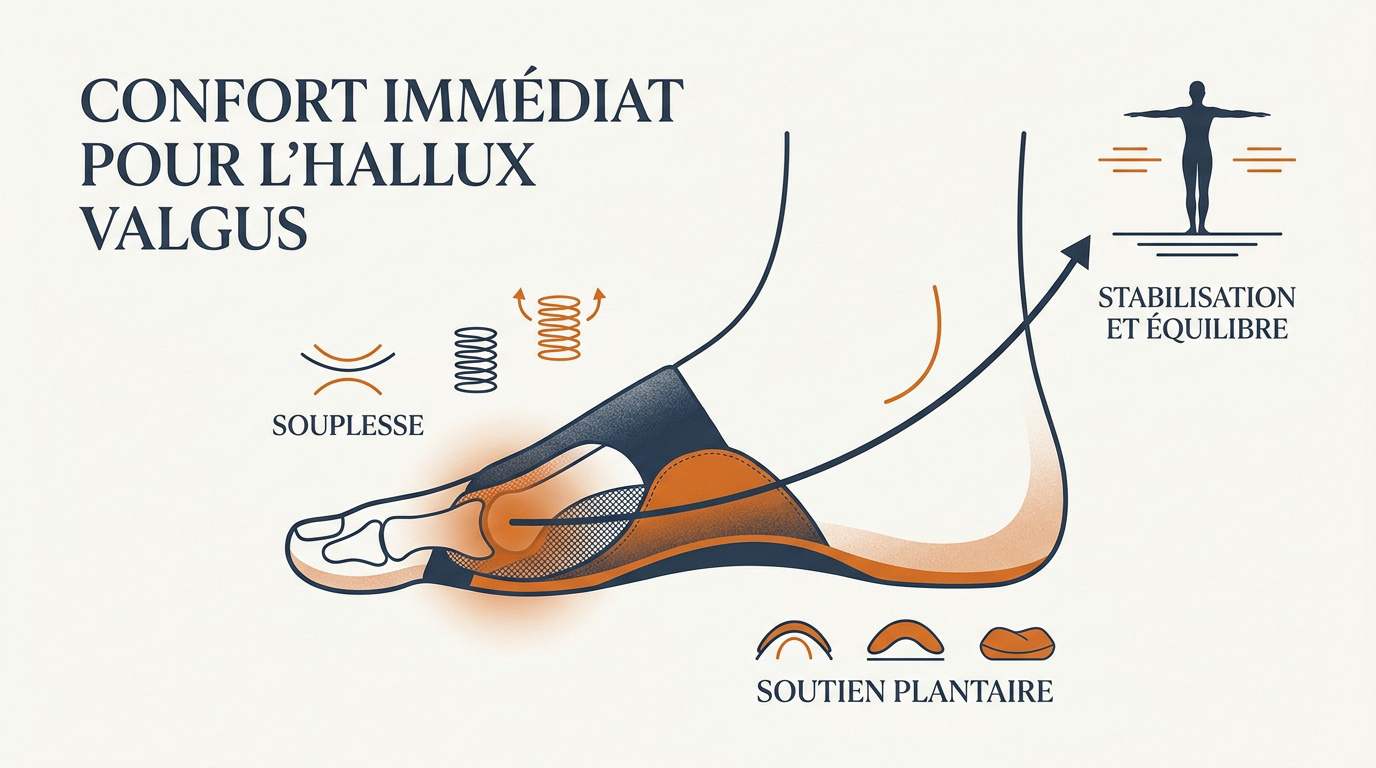
A well-supported arch changes everything. It prevents the foot from collapsing during effort. This support limits the worsening of the deformity. Your foot stays well aligned.
Load distribution is the priority. Good support offloads the first metatarsal effectively. You recover a healthy postural balance. Pressure on the bunion drops sharply as you walk.
A stable heel keeps you safe. It prevents needless rolling of the foot. Every step becomes surer and smoother.
The support reduces fatigue. Your feet stay light for longer.
How to measure your foot width precisely
To avoid picking the wrong model, it is essential to know your exact measurements before any purchase.
Calculate the circumference at the widest point
Grab a soft tape measure for this step. Wrap it around your foot without tightening, at the metatarsal joints, where the width is greatest. This is the strategic location of the bunion.
Then check this figure against a sizing guide. A precise measurement lets you choose between standard, wide and extra wide widths. Every extra centimeter defines a very specific comfort category.
| US women's size | Forefoot circumference | Recommended width |
|---|---|---|
| 6.5 | 24 cm | Extra wide |
| 7.5 | 24.4 cm | Extra wide |
| 8.5 | 24.8 cm | Extra wide |
| 9.5 | 25.2 cm | Extra wide |
| 10.5 | 25.6 cm | Extra wide |
| 11 | 26 cm | Extra wide |
A well-measured foot is a well-fitted foot. No more needless compression.
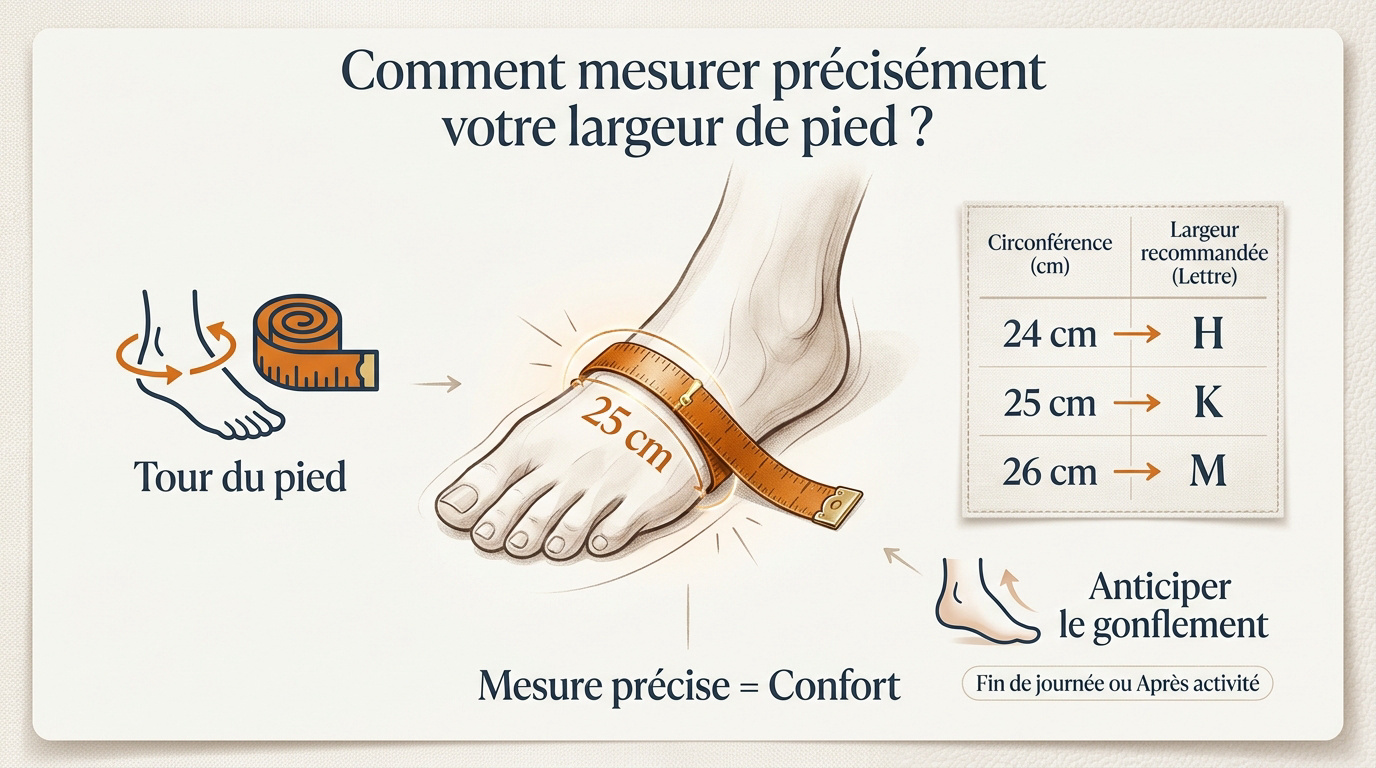
Allow for the foot's natural swelling in the evening
Take your measurements ideally at the end of the day. Why? Because the volume of your limbs increases naturally after several hours of walking or prolonged standing.
This safety margin is vital to your well-being. A shoe that fits in the morning often turns into an instrument of torture by 4 p.m. if the foot swells. This makes extra wide shoes for swollen feet a must. Plan for this phenomenon.
Finding the right shoes for bunions therefore takes patience and a keen eye.
This simple precaution avoids needless product returns. You save time.
Measuring tip:
- Always measure in the evening, after a day of walking
- Use a soft tape measure across the metatarsals
- Add 3 to 5 mm of margin to allow for swelling
- Check the conversion chart to identify your extra wide or very wide width
Which styles should you favor to stay stylish?
Having wide feet and bunions does not mean giving up on style or current trends.
Choose sneakers and loafers with a roomy last
Side zips or hook-and-loop closures are ideal. They let you slip the foot in without rubbing the joint. These systems guarantee a precise, quick fit.
Favor the "chunky" soles that are so popular today. These urban sneakers naturally offer a generous shape at the front. You get a contemporary look without compressing your toes. A roomy, wide toe box is exactly what a bunion needs.
For everyday outings, turn to a comfortable ballet flat for walking that blends flexibility and city style.
Comfort becomes completely invisible. No one will guess your specific needs.
Make the most of removable insoles
The removable insole is a major technical advantage. It lets you take out the original footbed. You can then slide in your own custom orthotics.
Removing the insole makes airing out much easier. It extends the life of your favorite shoes. It is the answer for full customization every day.
This option also gives you instant extra volume. That is handy if your feet swell in the evening.
Versatility is total. These models adapt to every foot shape.
Favor the volume of extra wide and very wide widths, the softness of stretch leather and the support of removable insoles to free your movements. Measure your foot in the evening to guarantee perfect accuracy. Adopt a pair of extra wide shoes for bunions today and finally rediscover the pleasure of pain-free walking.
FAQ
Why choose extra wide width shoes for bunions?
Why choose extra wide width shoes for bunions?
Extra wide and very wide widths offer far more interior volume than the standard widths sold on the market. That extra room is crucial to free the bunion area and remove the painful mechanical pressure on the big-toe joint. By picking these categories, you give your toes a natural alignment with no compression. Stretch materials or soft leathers such as deerskin mold to the deformity without creating inflammatory friction, delivering instant comfort.
How do I find my ideal foot width to avoid pain?
How do I find my ideal foot width to avoid pain?
We recommend you measure the circumference of your forefoot at its widest point, across the metatarsal joints, with a tape measure. Be sure to take this measurement in the evening to allow for the foot's natural swelling and to guarantee an optimal safety margin. Once you have your number, check it against a width conversion chart: for example, in a US women's size 11, a forefoot circumference of around 26 cm points to an extra wide width. A precise measurement is the only way to avoid shoes that are too narrow and make a bunion worse.
Which extra wide shoe styles combine looks and comfort?
Which extra wide shoe styles combine looks and comfort?
The choice is broad if you want to keep a contemporary look: chunky-soled urban sneakers, soft-leather loafers with side elastic, or wedge ballet flats. These styles quietly build in roomy shapes that hide the deformity while protecting the foot. Favor models with practical closures such as zips or hook-and-loop straps to make slipping the foot in easier. Also pick shoes with removable insoles so you can fit your own custom orthotics if needed.
Which materials are best for a foot with bunions?
Which materials are best for a foot with bunions?
Deerskin or lambskin leather is especially recommended for its extreme softness and its ability to stretch out. Stretch textiles and light synthetic fibers are also excellent options because they hug the contours of the foot without pressing on the bunion bump. These stretchy materials drastically reduce conflict zones and prevent redness or blisters. Regular care with the right products keeps that softness, which is essential to your daily comfort.
What are the benefits of a removable insole on these shoes?
What are the benefits of a removable insole on these shoes?
A removable insole lets you fully customize the fit. You can swap it for custom orthotics to stabilize your gait and give the arch better support, limiting collapse of the foot. On top of the potential volume gain, the system makes shoes far easier to keep clean and air out. It is a major technical asset for spreading the load and relieving lasting pressure on the first metatarsal.


Loading...