

The heel-weight-bearing shoe is mandatory during the first 21 days to offload the forefoot and ensure proper bone healing. This device protects the operated area from impact and stabilises metatarsal alignment. Wear it diligently before transitioning to wide sneakers.
Walking is allowed the day after surgery, but it calls for specific gear to guarantee flawless bone healing. Wearing the right shoes after bunion surgery lets you offload the forefoot and protect the operated area during the first three weeks.
The risk of pain or complications rises if the foot is not properly stabilised during this critical phase. Here is our rundown of offloading models and transition criteria to make your recovery a success.
The role of shoes after bunion surgery in healing
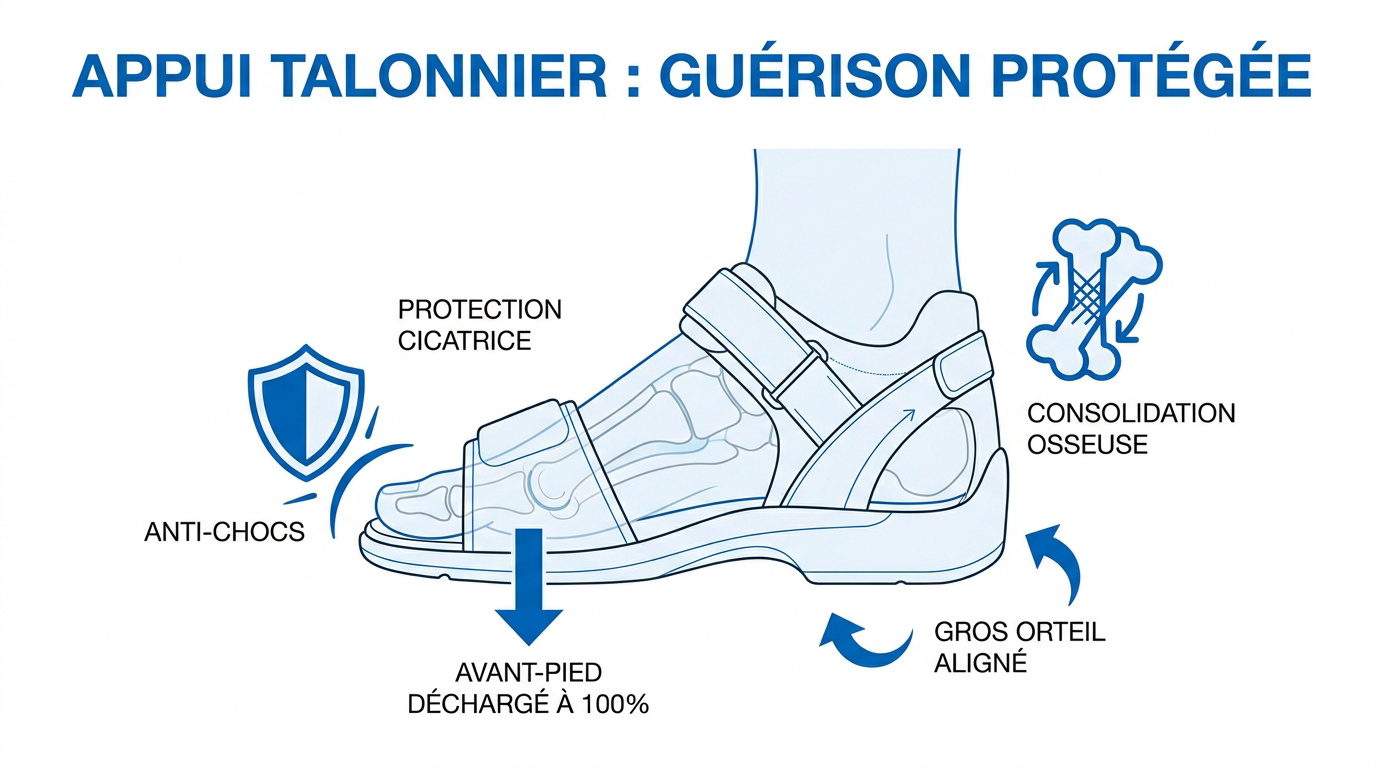
The heel-weight-bearing post-op shoe ensures proper bone healing by offloading the forefoot 100%. It protects the incision from impact and keeps the big toe aligned, an essential step before moving on to wide, soft models.
Going from a rest phase to controlled mobility requires a smooth transition to preserve tissues that are still rebuilding.
Protecting the operated area and reducing strain
The stiff sole locks the metatarsophalangeal joint. This lack of movement prevents sharp pain. The structure acts as a mechanical shield. Every step stays safe, with no harmful flexion.
The operated foot is vulnerable to everyday obstacles. A sturdy shell wraps around the toes. It prevents accidental trauma while you move around. Your foot stays shielded from outside impact.
For what comes next, check out our guide to suitable shoes to choose your future models wisely. Appropriate footwear limits unnecessary pressure.
Once the area is protected, the challenge becomes purely structural, ensuring the lasting strength of the repaired bone.
Mechanical support for bone healing
The shoe stabilises the segments after the osteotomy. Good positioning promotes fast internal healing. It also limits the risk of early recurrence. Metatarsal alignment is thus kept perfectly intact.
Moderate pressure stimulates regeneration. The structure guides the load without compromising the surgery. Controlled weight-bearing helps the bone callus form. The foot gradually regains its strength.
Always follow your surgeon's instructions. Every stage of resuming weight-bearing must be secured by this specific gear.
Key benefits of the post-op shoe:
- Reduced swelling
- K-wire alignment
- Stabilisation of the first metatarsal
The specifics of the initial offloading shoe
Once you understand its protective role, it is worth looking closely at the technical features of the offloading shoe used right after surgery.
Benefits of the heel-weight-bearing sole
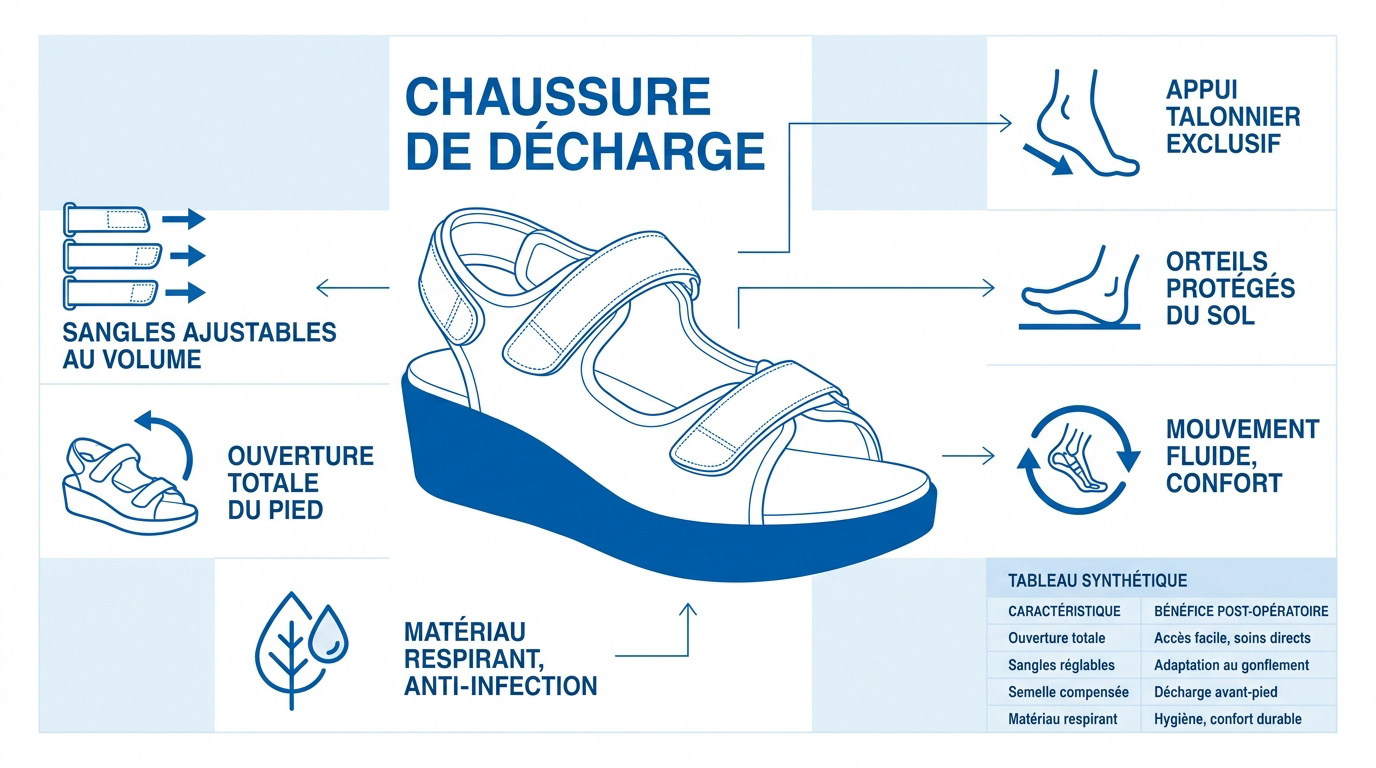
This sole shifts your weight backwards. The heel then carries the entire load. This fully frees the forefoot from strain. You walk without engaging the operated area.
The sole has a specific incline. This geometry stops the toes from touching the ground. It is the guarantee of successful immobilisation during the first few weeks.
Walking stays comfortable despite the bulky look. The roll of the foot remains natural. This avoids pain in the ankle or knee.
Adapting to foot volume and dressings
The system uses hook-and-loop straps. The foot swells after surgery. These adjustments let you fine-tune the width without compressing the sensitive tissue.
The full opening is a key point. The shoe easily accommodates a bandaged foot. This avoids any rubbing against the incision as you put it on.
The textile materials are highly breathable. They prevent moisture build-up under the dressings. This reduces the risk of post-op infection.
| Feature | Post-op benefit |
|---|---|
| Full opening | Easy, pain-free fitting. |
| Adjustable straps | Precise fit for changing swelling. |
| Wedge sole | Full offloading of the operated forefoot. |
| Breathable material | Keeps the dressing hygienic. |
What to look for in your transition shoes
After a few weeks, the surgeon often allows the switch to a transition shoe, a choice that rests on precise comfort criteria.
Make toe box width the priority
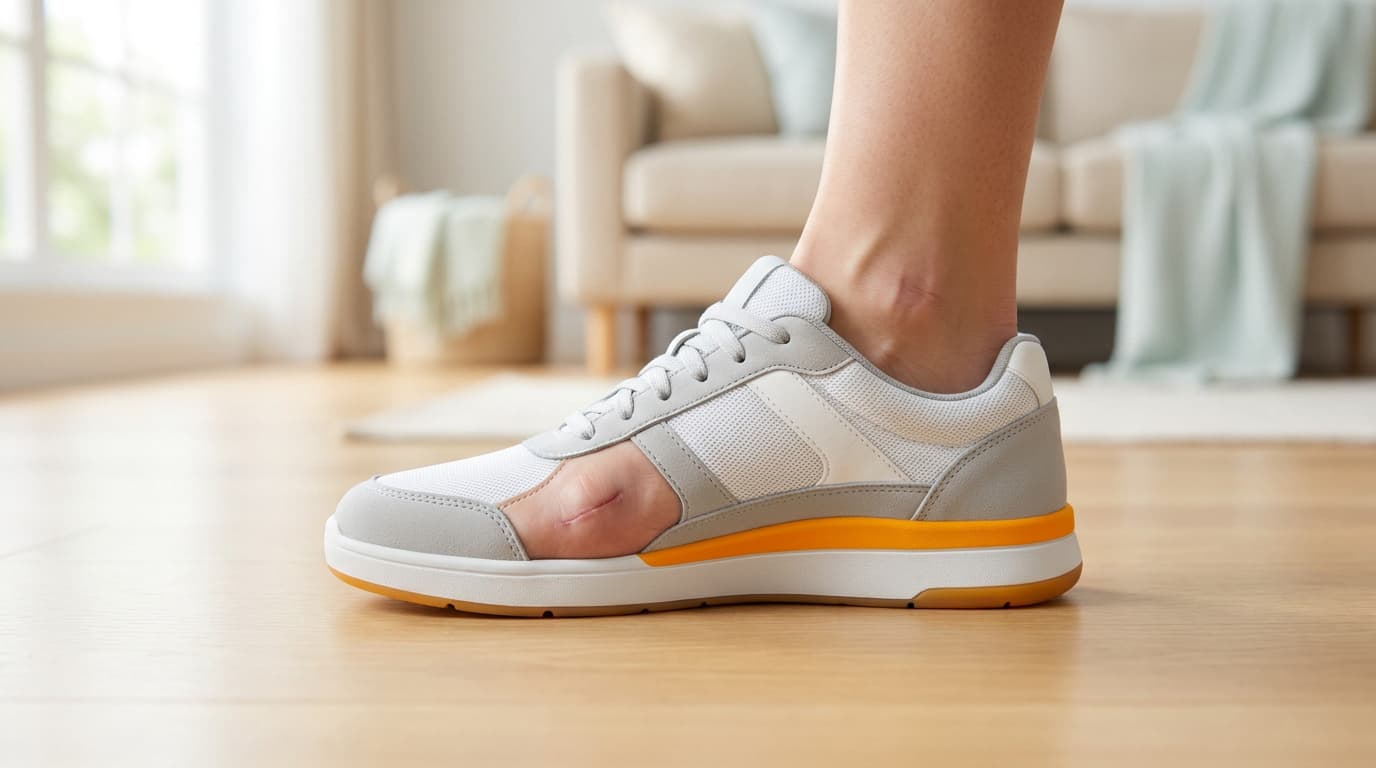
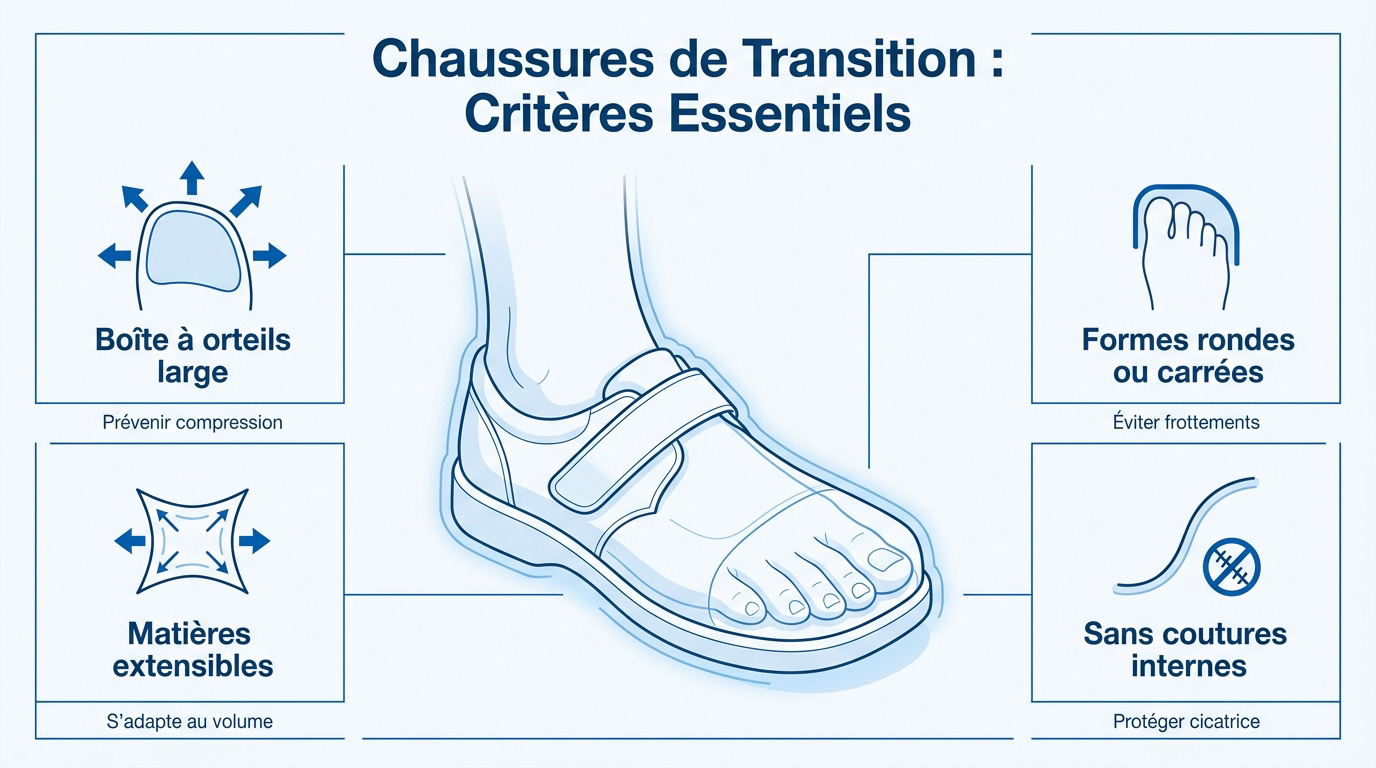
The operated foot stays bulky because of lingering residual swelling. Go for models with a generous toe box. This avoids any painful compression of the forefoot.
Round or square toe shapes are ideal here. They prevent sideways rubbing on the sensitive area. You limit skin inflammation and night-time pain as a result.
A barefoot shoe can offer this naturally needed space. That volume protects your healing during daily walking.
Available room is your absolute priority. Never sacrifice comfort for looks.
Picking stretchy, seam-free materials
Bet on stretchy technical fabrics such as mesh or very soft leathers. These materials hug the shape of the foot without applying pressure. They adapt perfectly to volume changes throughout the day.
Check there are no internal pressure points at all. Poorly placed seams irritate the still-fragile, thin incision. A smooth interior effectively protects this sensitive area from repeated rubbing.
Technical features to look for first:
- Soft leather
- Stretchy mesh
- Seamless lining
- No stiff overlays
How to return to normal footwear
The definitive return to dress shoes should be handled with care, starting with athletic models before reintroducing more formal footwear.
Why sneakers help during the resumption phase
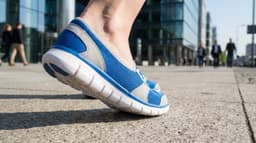
Sneakers offer protective cushioning. A thick sole absorbs impact. It protects your joints as a result.
The lacing system provides flexible support. You adjust the tightness to the swelling. It is ideal for managing daily swelling.
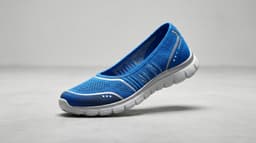
For a pain-free urban style, comfortable ballet flats remain an interesting option. They combine softness and lightness.
Stability prevents sprains. Go for running models.
Precautions when reintroducing high heels
Limit the height to begin with. A heel of two to three centimetres is reasonable. Beyond that, the pressure on the forefoot is excessive. The bone needs to strengthen first.
Alternating is a basic rule. Don't wear heels all day. Alternate with flats to rest your ligaments.
Banish pointed toes. Respect the natural shape of your foot. That way you will prevent any new deformity in the future.
Keys to a successful recovery:
Secure your recovery by wearing the post-op shoe for 21 days to stabilise the bone and reduce swelling. Then transition to wide, soft sneakers to protect your operated area. Act now to enjoy pain-free walking and perfectly aligned feet tomorrow!
FAQ
Why wear an offloading shoe after bunion surgery?
Why wear an offloading shoe after bunion surgery?
The heel-weight-bearing post-op shoe is essential to ensure proper bone healing. It offloads the forefoot 100% by shifting your weight onto the heel, protecting the operated area from mechanical pressure and outside impact. This device locks the joint to prevent sharp pain and keeps the big toe aligned after the osteotomy. It is a technical shield that promotes fast internal healing while still allowing you to walk the day after surgery.
When can I go back to normal shoes?
When can I go back to normal shoes?
The return to normal footwear usually happens from around day 21, provided the swelling has gone down enough and the incision has fully healed. This transition must be approved by your surgeon at your check-up appointment. It is best to start with wide, soft models that have a stiff sole. Switching to slimmer dress shoes or high heels should only be considered after the third month, once the foot has regained its normal volume and mobility.
What should I look for in my first transition sneakers?
What should I look for in my first transition sneakers?
Go for a generous toe box and a round or square shape to avoid any sideways compression. The foot often stays swollen for several months, so available room is the number one comfort criterion to protect the incision. Choose stretchy materials such as mesh or soft leather, with no internal seams to limit rubbing. A lacing or hook-and-loop adjustment system is ideal to fine-tune support as the swelling changes over the course of the day.
Am I allowed to drive in an orthopedic shoe?
Am I allowed to drive in an orthopedic shoe?
Driving is strictly forbidden as long as you wear a post-op offloading shoe. This device changes how you press the pedals and how quickly you can react, compromising safety. You can only get back behind the wheel once you have returned to normal footwear and regained enough foot mobility, with the green light from your medical team at your post-op follow-up.
How do I manage foot swelling when getting shoes on?
How do I manage foot swelling when getting shoes on?
Swelling is normal and can last several months. To make getting shoes on easier, raise your legs as often as possible and do the prescribed self-rehab exercises. Always pick out new shoes at the end of the day, when your foot is at its largest. Use full-opening models that let you slide the foot in without rubbing against the sensitive area. Breathable fabrics are also recommended to avoid moisture build-up and keep things perfectly hygienic during recovery.


Loading...