
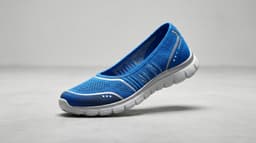

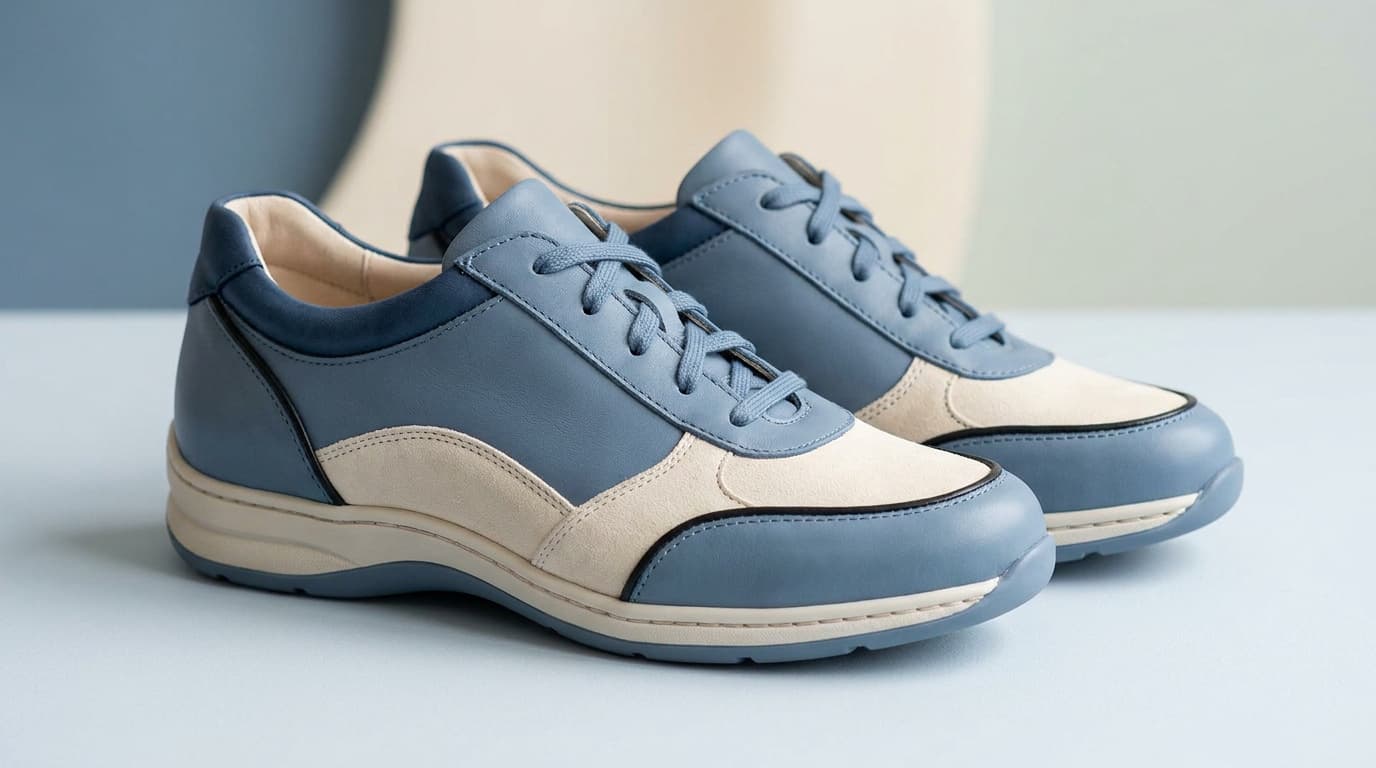
Custom orthopedic shoes correct severe conditions through a fully bespoke design. This medical device restores mobility and protects fragile tissue, especially in cases of diabetes or bunions. Modern 3D scanning techniques guarantee millimeter precision for these orthopedic shoes for wide feet.
Bespoke orthopedic shoe-making now makes it possible to correct complex deformities while guaranteeing fully personalized style. These high-end medical devices combine lightweight materials and refined finishes to transform your day-to-day mobility.
Yet finding footwear that reconciles therapeutic needs with elegance remains a challenge for many women. This guide breaks down the design process, the conditions treated and the technical innovations to help you regain optimal walking comfort.
Custom orthopedic shoes: definition and purpose 👟
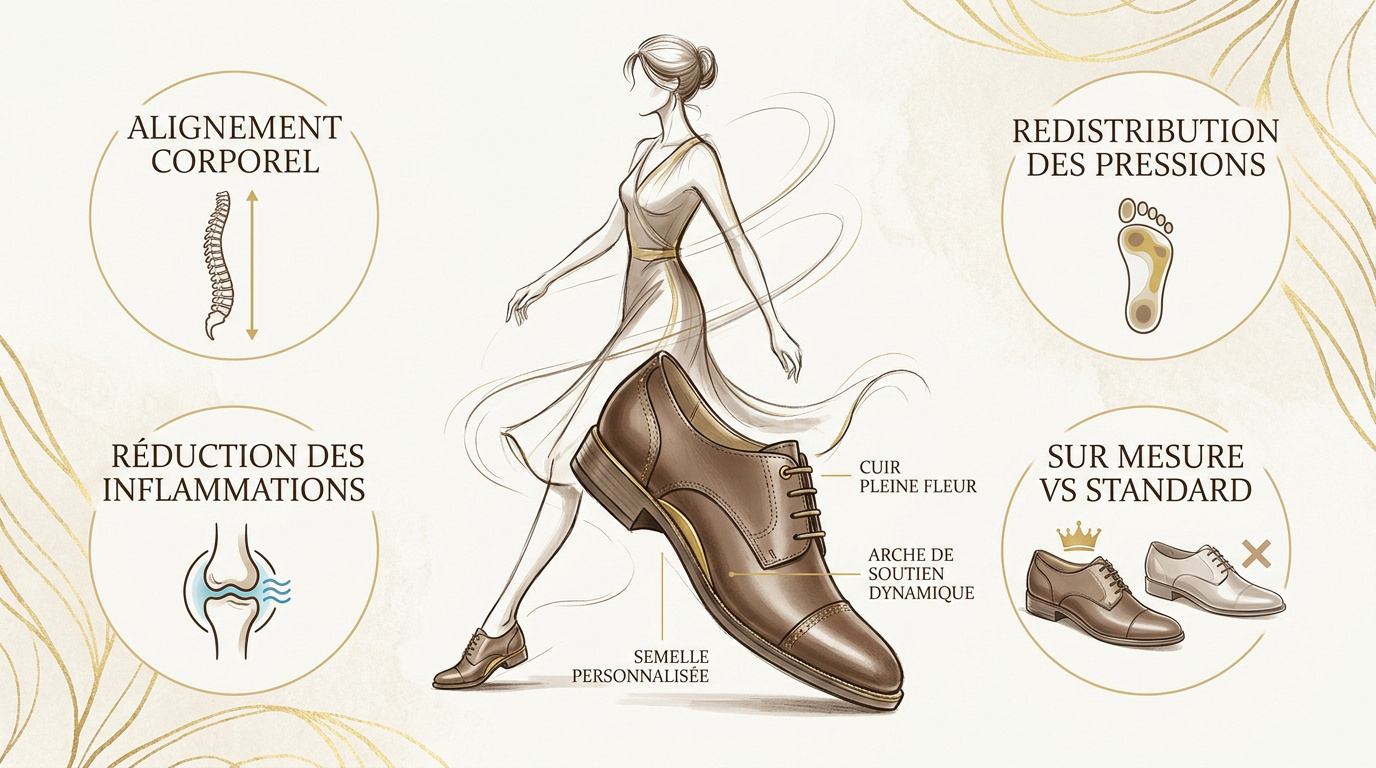
Custom orthopedic shoes correct serious foot deformities and relieve chronic pain through full personalization. A precise mold redistributes plantar pressure, improving posture and joint mobility.
This postural correction relies on a fine biomechanical analysis that neutralizes joint tension from the very first step.
Correcting deformities and relieving pain
Bespoke footwear realigns the upper body segments. This biomechanical change stabilizes the ankles. It reduces strain on the knees and lower back.
Thermoformed foot orthoses create specific offloading zones. They spread plantar load evenly across the whole surface.
The absence of friction points limits skin inflammation. The foot recovers a smooth walking dynamic. Painful mechanical tension gradually fades from daily life.
Differences from off-the-shelf store models
Standard models impose a fixed and often narrow internal volume. Custom made gives the toes complete freedom. The heel hold still stays perfectly snug.
Mass production ignores the morphological differences between your two feet. The specialist precisely treats asymmetries in length or width.
Standard removable insoles lack the depth required for severe conditions. To learn more, read our guide on orthopedic shoes for women. They are no substitute for a fully built shoe.
Each pair is a unique piece adapted to your anatomy. It results from a precise individual mold. No off-the-shelf model can match this technical precision.
Foot conditions treated by bespoke footwear 🩺
Beyond general comfort, these medical devices are the most effective answer for treating specific, disabling conditions in daily life.
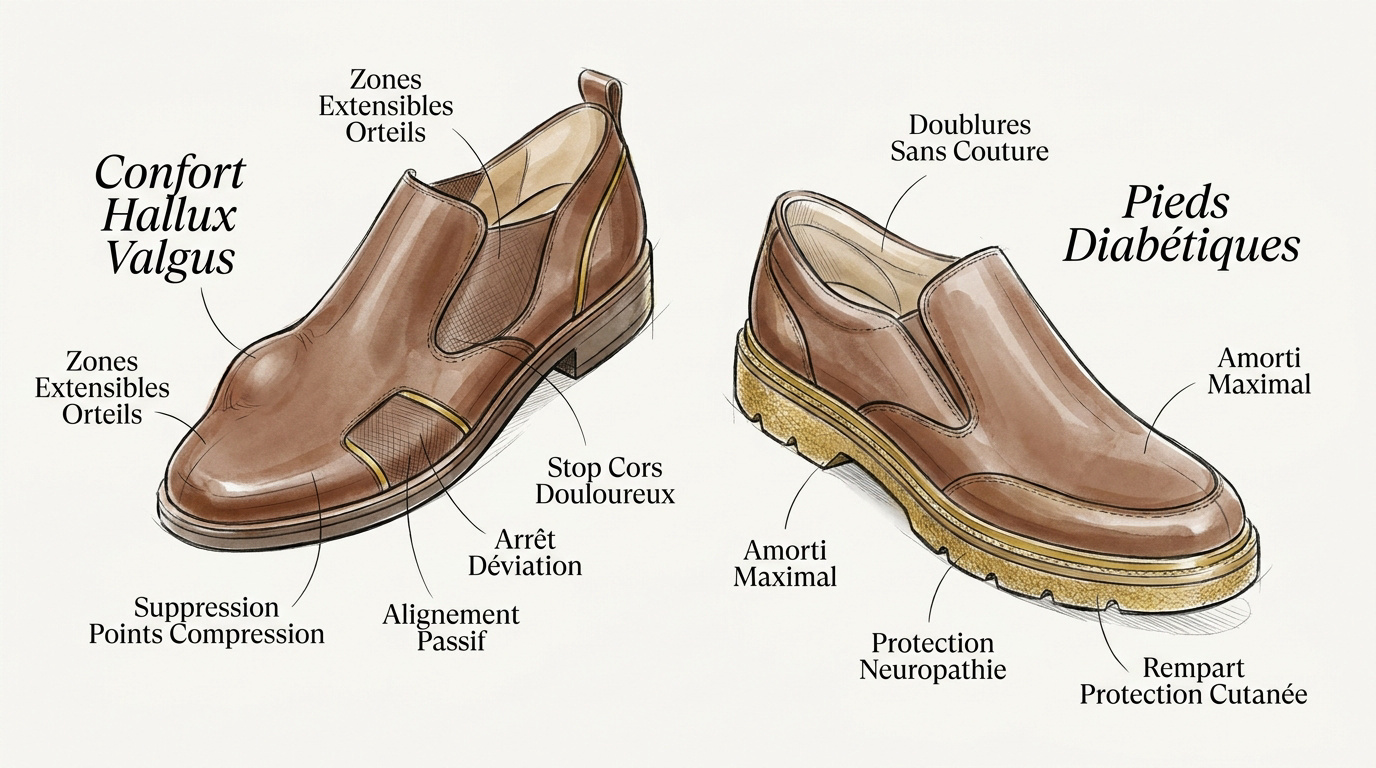
Managing bunions and deformities
The internal volume is adapted to the bony bump. Using soft leathers limits painful rubbing over the bunion. Wearing a shoe designed for bunions ensures pain-free walking with no mechanical stress.
Stretch zones accommodate claw toes without constraint. This specific design prevents corns from forming. The structure respects the real anatomy of the deformed foot.
- Halting the joint deviation
- Complete removal of compression points
- Passive realignment of the big toe
Protecting sensitive feet and diabetic cases
The inner linings are completely smooth and seam-free. This feature prevents any accidental skin lesion. This protection is vital for the safety of diabetic feet.
The cushioning is densified to compensate for the loss of sensation linked to neuropathy. Fragile tissue benefits from a permanently protective environment. These orthopedic shoes for wide feet stabilize contact with the ground.
The shoe acts as a barrier against plantar ulcers. It prevents serious complications through targeted offloading. Preserving skin integrity is the top priority.
Diabetic foot — points to watch:
- Check that there are no protruding internal seams
- Favor antibacterial, breathable linings
- Regularly inspect the skin after wear
Key steps in designing a custom model 🛠️
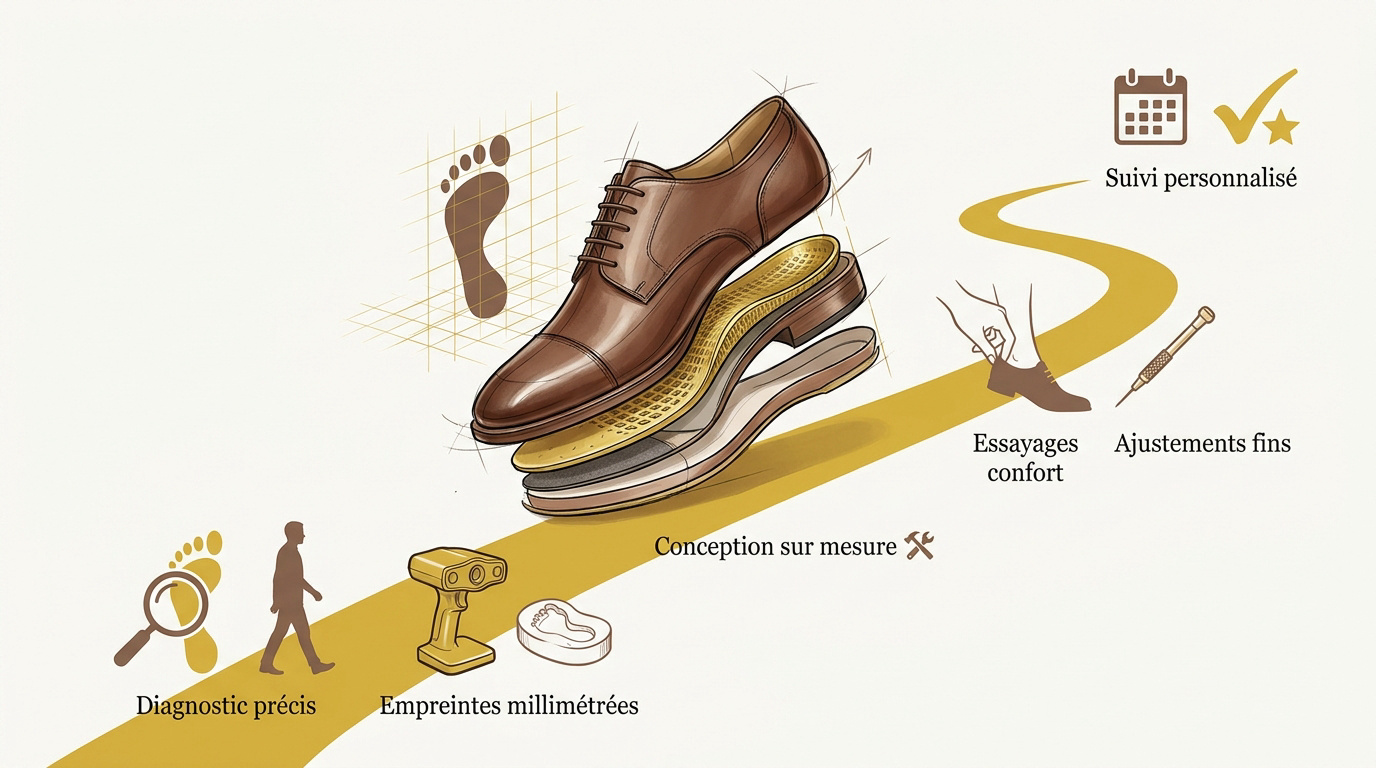
To reach this level of precision, the making process follows a rigorous protocol blending clinical diagnosis and advanced technology.
Clinical exam and precise impression taking
The gait analysis is carried out on a treadmill or a dedicated platform. The specialist watches each phase of the movement closely. This diagnosis identifies the pressures exerted by the foot.
The 3D scan or plaster cast then captures the exact shape down to the millimeter. This digital or physical replica becomes the working base.
The specialist also assesses your real lifestyle. The shoe must fit your daily activities perfectly. Your walking habits drive the final design choices.
Fittings and adjustments for optimal ergonomics
The first fitting uses a provisional mockup. This step lets you check the overall balance of the model. Immediate comfort stays the absolute priority during this test.
| Step | Specialist action | Goal for the wearer |
|---|---|---|
| Foot assessment | Analysis of the condition | Precise diagnosis of needs |
| Impression taking | 3D scan or cast | Exact replica of the anatomy |
| Provisional fitting | Test on a mockup | Validation of comfort and volume |
| Final delivery | Gait check | Guaranteed therapeutic effectiveness |
A follow-up is arranged after a few weeks of wear. Fine tweaks ensure lasting, total satisfaction. This check prevents any residual pressure point.
Bringing together medical precision and modern design ✨
Far from the clichés of bulky shoes, today's creations pull off the feat of pairing therapeutic performance with refined aesthetics.
Material choices and a lightweight structure
Full-grain calf leather offers natural sturdiness. Technical textiles such as fly-knit mesh guarantee optimal breathability. These materials hold the foot without needless compression.
The rigorous selection of components ensures the product's durability:
- Full-grain calf leather and stretch microfibers
- Lightweight polyurethane soles for cushioning
- Antibacterial linings for hygiene
The closure systems make daily life easier. Velcro straps and side zips allow quick on-and-off. These features provide precious independence to women with grip difficulties.
Style personalization for everyday wear
Orthopedic corrections are now integrated invisibly. The internal volume adapts to the condition without altering the silhouette. The shoe keeps the look of an elegant city model.
Modern finishes turn medical equipment into a fashion accessory. Patent or metallic leathers add a sophisticated touch. For special occasions, a comfortable wedding shoe is a perfect illustration of this successful pairing.
Custom made adapts to every season. From protective ankle boots for winter to airy sandals for summer, the stylistic limits vanish. Your unique morphology thus benefits from permanent aesthetic support.
Key takeaway:
Bespoke footwear corrects your deformities, stabilizes your joints and aligns your posture. By choosing custom orthopedic shoes, you protect your sensitive feet and regain a smooth, pain-free walk. Absolute comfort for every step.
FAQ
Why choose custom orthopedic shoes?
Why choose custom orthopedic shoes?
Custom made delivers a level of personalization that off-the-shelf models simply cannot match. These devices correct severe foot deformities, redistribute plantar pressure and stabilize posture to relieve joint pain in the knees and back. Each pair is built by a specialist to fit your unique anatomy, ensuring optimal support and freedom of movement, and is especially valuable for treating asymmetries between the left and right foot.
Which conditions are treated by this type of bespoke footwear?
Which conditions are treated by this type of bespoke footwear?
Custom made footwear targets complex conditions such as bunions (hallux valgus), claw toes and rheumatoid deformities. It is also essential for diabetic feet, where protection against ulcers and management of neuropathy are vital. These shoes also meet the needs tied to neurological disorders, paralysis or leg length discrepancies. The goal is to neutralize compression points to restore functional, pain-free walking.
How is a custom shoe designed step by step?
How is a custom shoe designed step by step?
The journey starts with a full foot assessment including a clinical exam and a gait analysis. The specialist then takes a precise impression through a 3D scan or a plaster cast to capture the exact shape of the foot. After modeling, a fitting with a provisional mockup confirms balance and comfort. Final delivery follows the last adjustments, ensuring a perfect ergonomic fit fully adapted to your lifestyle.
Can orthopedics and style really go together for women's shoes?
Can orthopedics and style really go together for women's shoes?
Modern manufacturing techniques make it possible to integrate therapeutic corrections almost invisibly. Premium materials such as full-grain calf leather or stretch textiles deliver an elegant design close to classic city shoes. Wearers can personalize their pair by choosing finishes, colors (patent, metallic) and styles. Whether winter ankle boots, summer sandals or dress shoes for ceremonies, style is now inseparable from medical precision.
What warranty and after-sales follow-up should I expect?
What warranty and after-sales follow-up should I expect?
Specialist makers usually offer a 6-month warranty against manufacturing defects and for any needed adjustments. This post-delivery follow-up allows fine tweaks if pressure points appear after a few weeks of daily wear. The specialist also supports you with specific care advice. Complementary solutions, such as toe orthoses or foot drop aids, can be added to maximize the effectiveness of the treatment over the long term.

Loading...